

Luxor and Karnak Temples: Life, Afterlife, and the Meaning of Place in Ancient Egypt
Understanding Ancient Egypt at Luxor and Karnak
Luxor and Karnak are not just archaeological wonders. They are the physical embodiment of how the ancient Egyptians understood life, death, and eternity. Their positions on the Nile’s banks, their monumental scale, and their intricate symbolism reveal a civilisation obsessed with the cycles of life and afterlife.
Quick Summary
- West Bank (Luxor): Land of the dead, mortuary temples, Valley of the Kings, and the dramatic Temple of Hatshepsut.
- East Bank: Land of the living, Karnak’s sprawling ritual city and Luxor Temple’s festival of renewal.
- Crossing the Nile: Symbolic passage from life to afterlife.
- Standout experiences: Vivid tomb art, the Sacred Lake at Karnak, botanical “zoo” chamber, and Luxor Temple at dusk.
- Pro tip: Timing matters. Visit Luxor Temple in the evening for a magical atmosphere.
West Bank of Luxor: Where Egypt Faced Eternity
Memory, Death, and the Eternal Journey
In Luxor, the Nile was never just a river. For the ancients, it was the dividing line between worlds. The West Bank was reserved for mortality, legacy, and the mysteries of what came after this life.
The Colossi of Memnon: Guardians of the West Bank
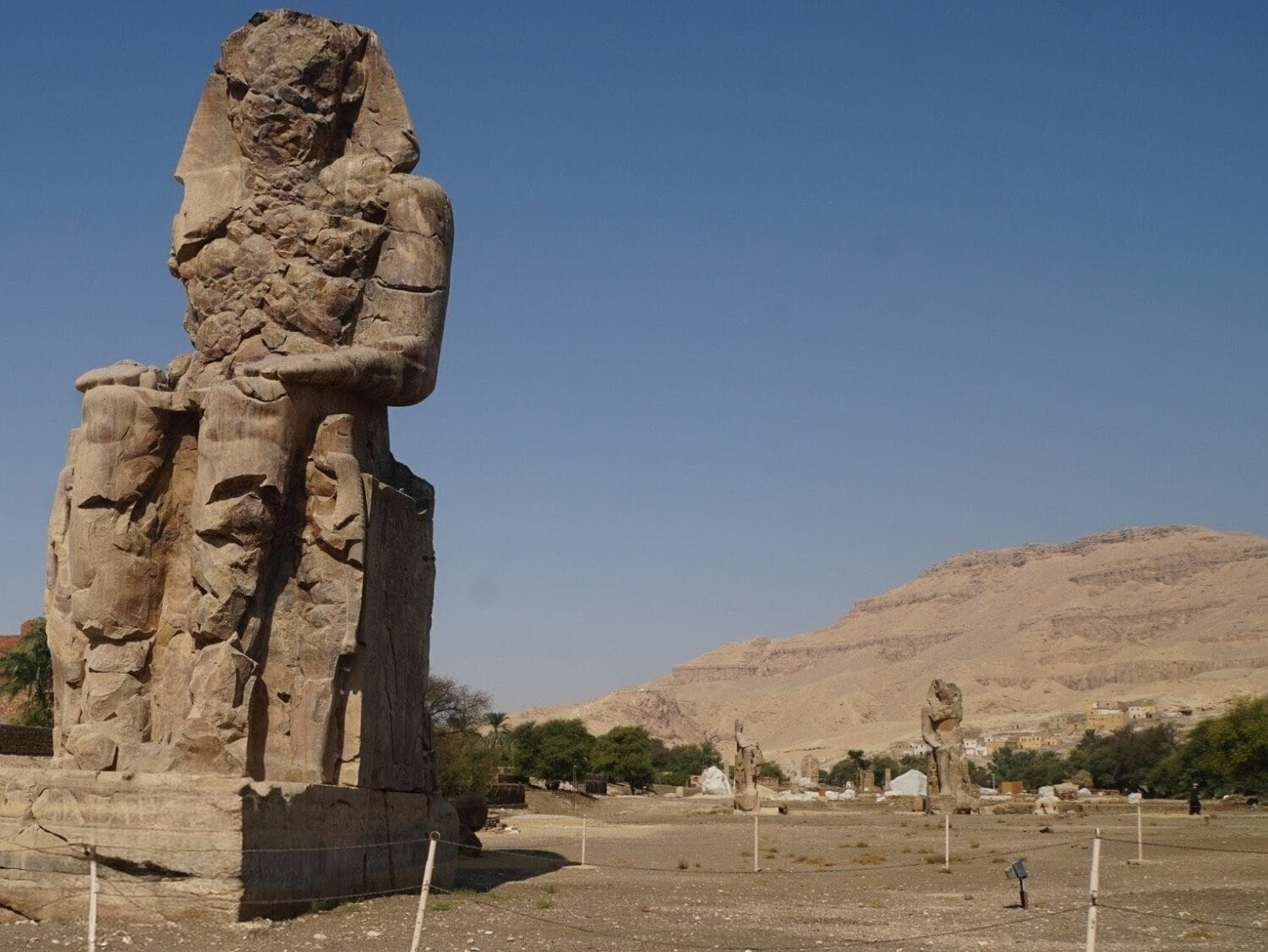
Rising from the plain near the Nile stand the Colossi of Memnon, two imposing 18-metre statues that have watched over ancient Thebes for more than 3,400 years.
They once guarded the entrance to the mortuary temple of Amenhotep III, much of which has long since vanished. Even in isolation, the statues convey authority and permanence. Arriving early, with few others around, made the experience feel quietly powerful rather than rushed.
The Temple of Hatshepsut at Deir el-Bahari
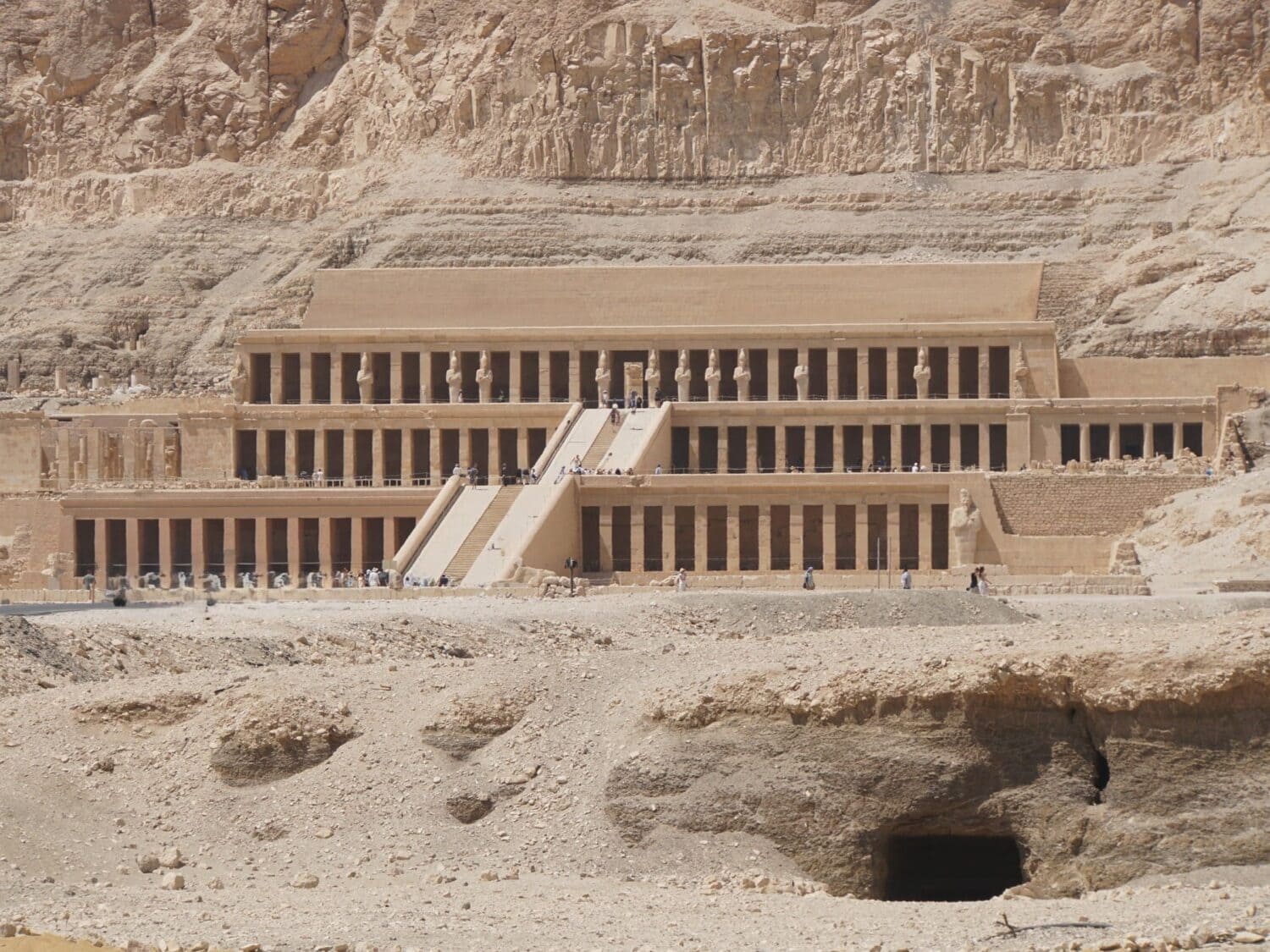
Carved with intention into the rose-coloured cliffs, the Temple of Hatshepsut is perhaps the boldest statement of any Egyptian ruler. As a female pharaoh who stabilised Egypt and expanded its reach, Hatshepsut left behind a sanctuary of terraces and colonnades that still impress with their confidence. The temple’s alignment, reliefs, and sheer scale all worked together to broadcast her divine legitimacy and secure her memory for millennia.
This was no modest funerary monument. It was a statement of authority.
The Ramesseum: Ramses II and the Architecture of Memory
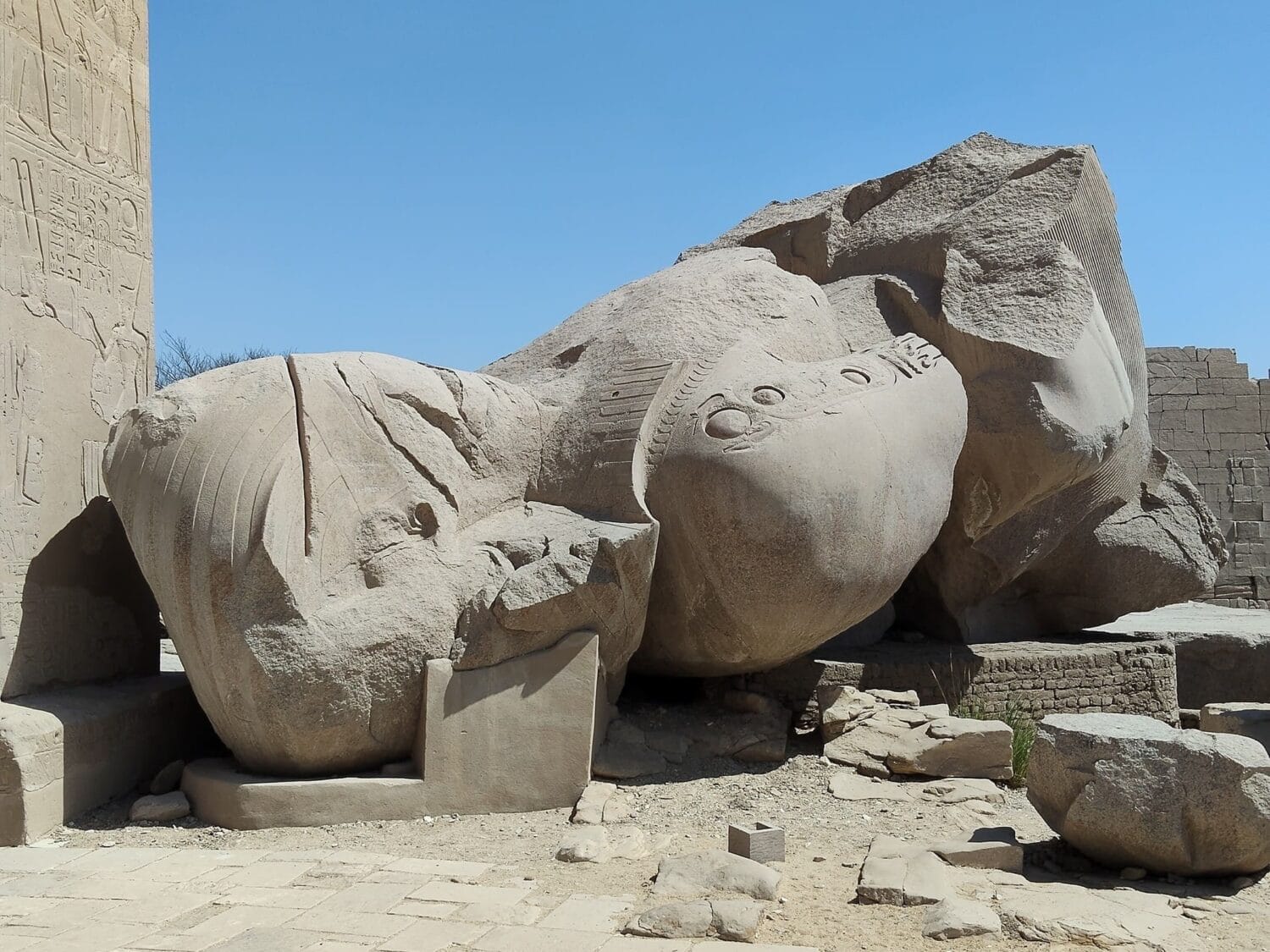
Nearby lies the Ramesseum, Ramses II’s vast mortuary temple, often described as his “House of Millions of Years”.
Although much of the structure now lies in ruin, its original scale is still confronting. The remains of a colossal seated statue of Ramses II dominate the site, with individual fragments weighing hundreds of tonnes. Walking among these fallen pieces gives a visceral sense of the ambition behind the temple’s construction.
Exploring the Ramesseum in near silence was one of the most surreal moments of the journey. Without crowds, it was easier to imagine the temple not as a ruin, but as a functioning place of ritual, memory, and political messaging.
The Valley of the Kings
Set back into the desert hills is the Valley of the Kings, final resting place of the New Kingdom pharaohs.
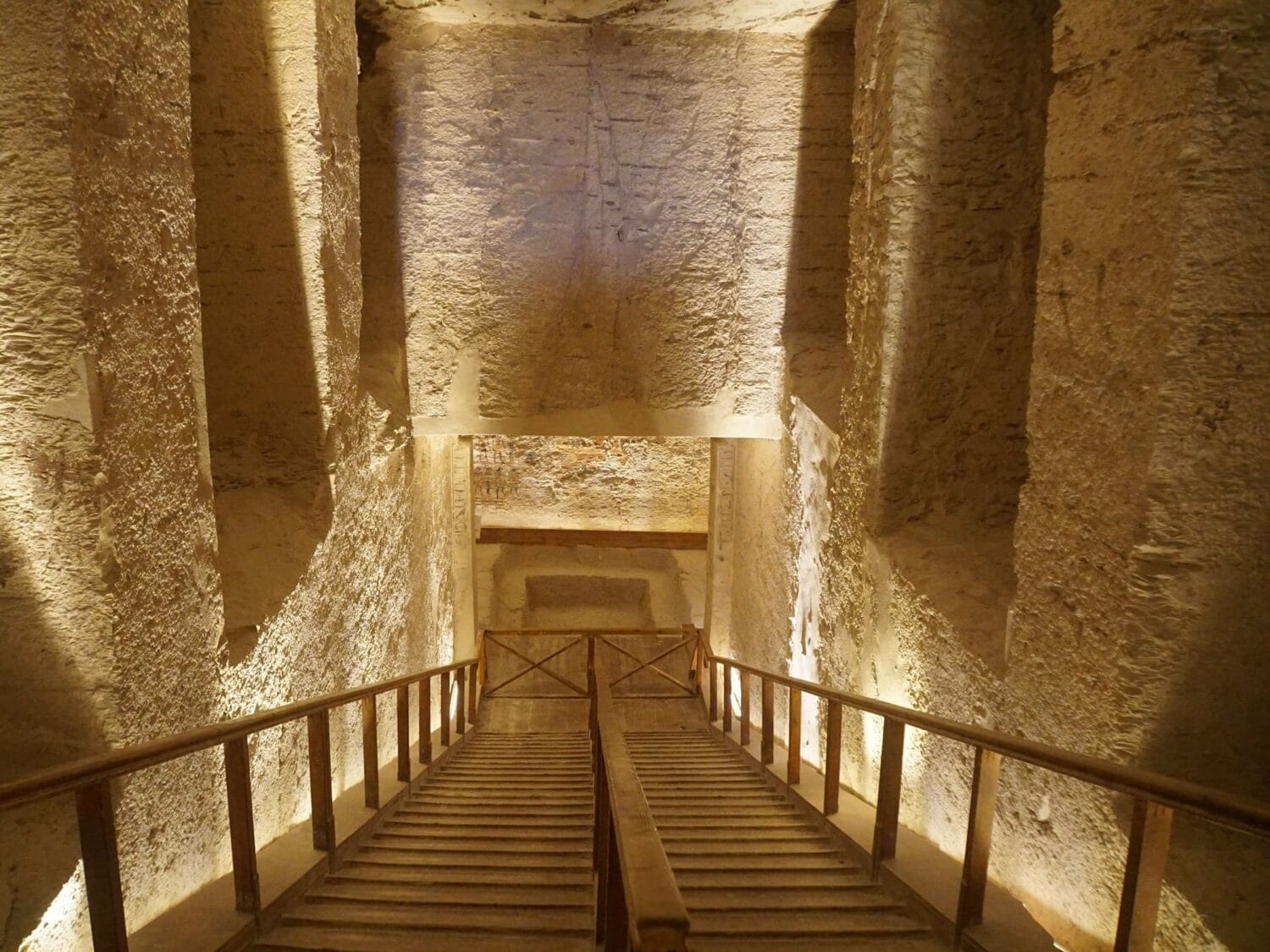
We explored several tombs, including that of Tomb of Ramesses IX. Descending into the rock-cut corridors, walls are alive with colour and symbolism. Scenes depict gods, protective spells, and journeys through the underworld, all designed to ensure safe passage into the afterlife.
One particularly striking image was the god Wepwawet, “Opener of the Ways”, shown guiding Pharaoh Seti I. The ankh, or Key of Life, held at the top of Wepwawet’s staff reinforces his role as a divine guide, ensuring the pharaoh would rule not only in life, but eternally in death.
This symbolic approach to life and the afterlife continues further north at Dendera and Abydos, where Egypt’s spiritual landscape becomes even more pronounced.
These images were not decorative. They were functional, spiritual instructions carved in stone.
Traveller’s Note:
The tombs require physical stamina. There are steep slopes, low ceilings, and still, warm air. Pacing is essential, so build in time to rest and hydrate, especially in the hotter months.
From Above: Hot Air Ballooning Over Ancient Thebes
An early start took us airborne in a hot air balloon near the Valley of the Kings. Watching the sun rise over temples, fields, and desert was undeniably special.
A practical tip for anyone considering this experience: if you can, position yourself on the right-hand side of the basket, which more often faces the key sites. Those on the opposite side may rely on the pilot rotating the basket, which does not always happen in time for photographs.
Even so, drifting silently above the ancient landscape offered a completely different perspective on how closely life, death, and agriculture were once intertwined.
East Bank of Luxor: Where Life Was Celebrated
If the West Bank honoured memory and eternity, the East Bank celebrated life.
Karnak Temple: A City Built by Faith
The Karnak Temple complex is immense. Covering around 250 acres, it is larger than many ancient cities and far exceeds the footprint of the Great Pyramid at Giza.
Built and expanded over nearly 2,000 years, Karnak reflects the ambitions of successive pharaohs, each adding to the complex as an act of devotion and legitimacy. Walking through its pylons and courtyards feels like moving through layers of time.
The Sacred Lake remains one of its most evocative features. This body of water symbolised creation and renewal, where priests purified themselves before rituals honouring Amun and the gods. Life, ritual, and cosmology were inseparable here.
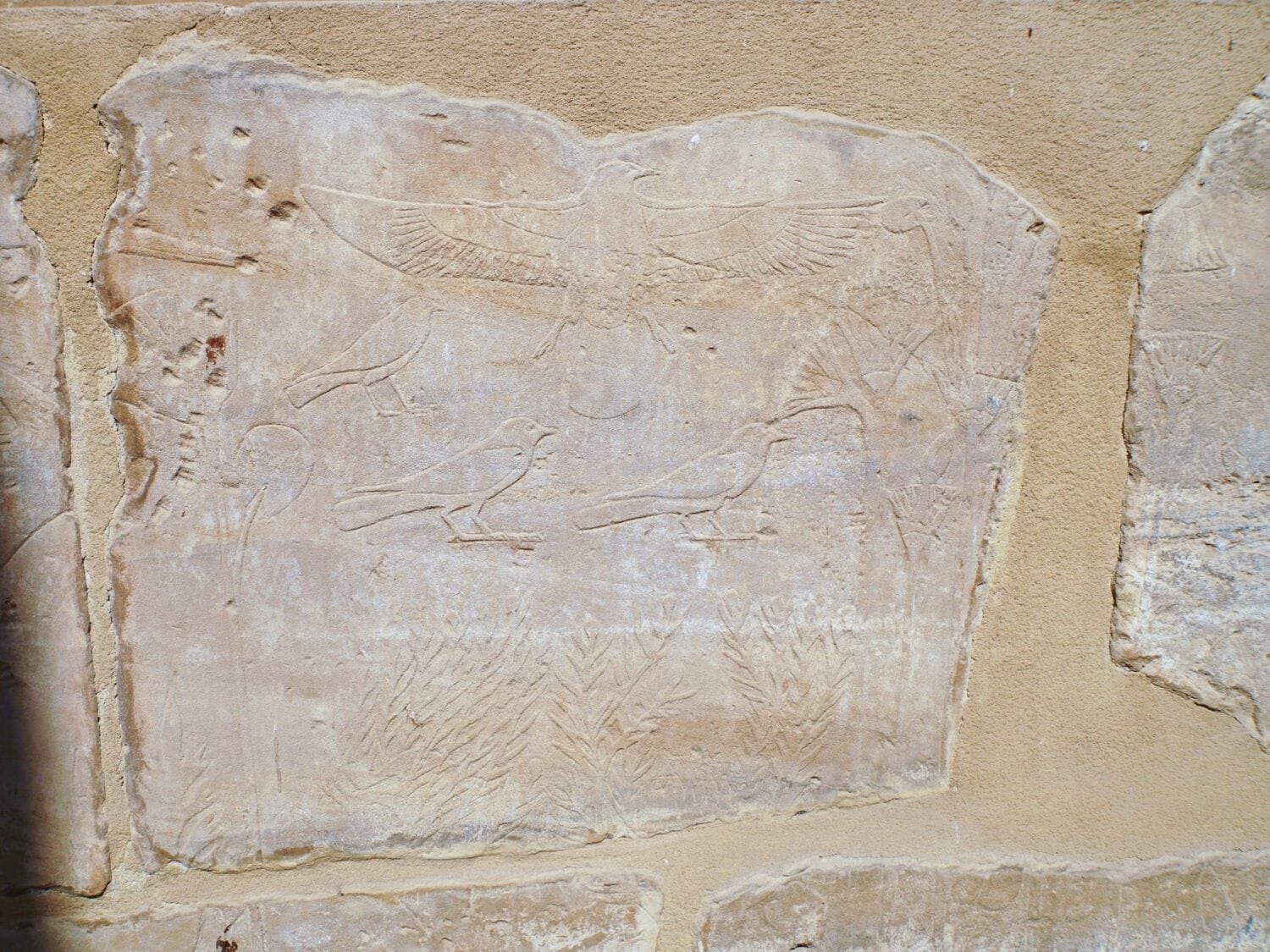
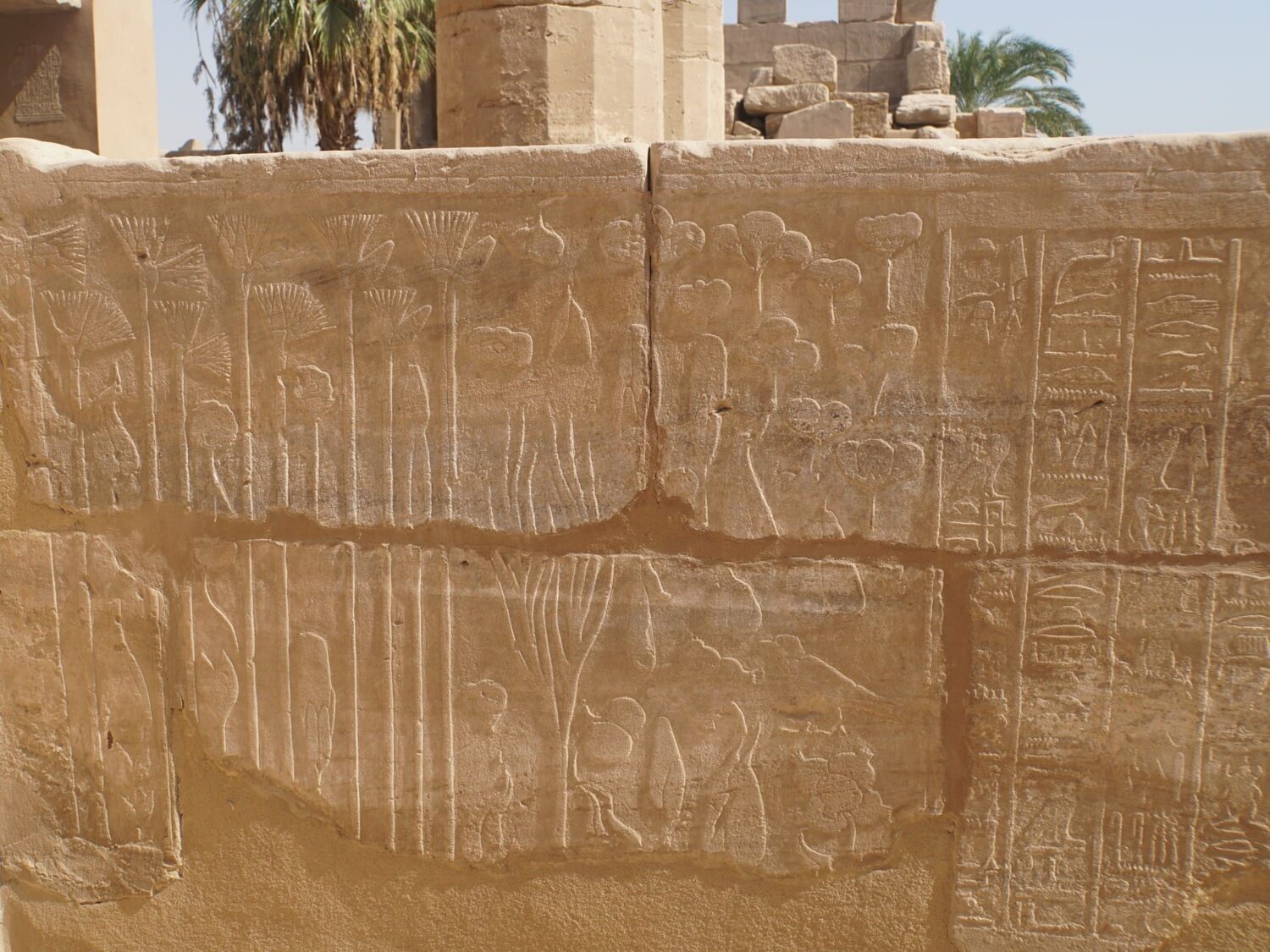
Hidden within the complex is a small chamber commissioned by Thutmose III. The carvings depict plants and animals brought back from military campaigns. Many scholars consider this the world’s earliest recorded botanical garden and zoo, evidence of Egypt’s fascination with lands beyond its borders.
Luxor Temple at Dusk: When Timing Transforms Experience
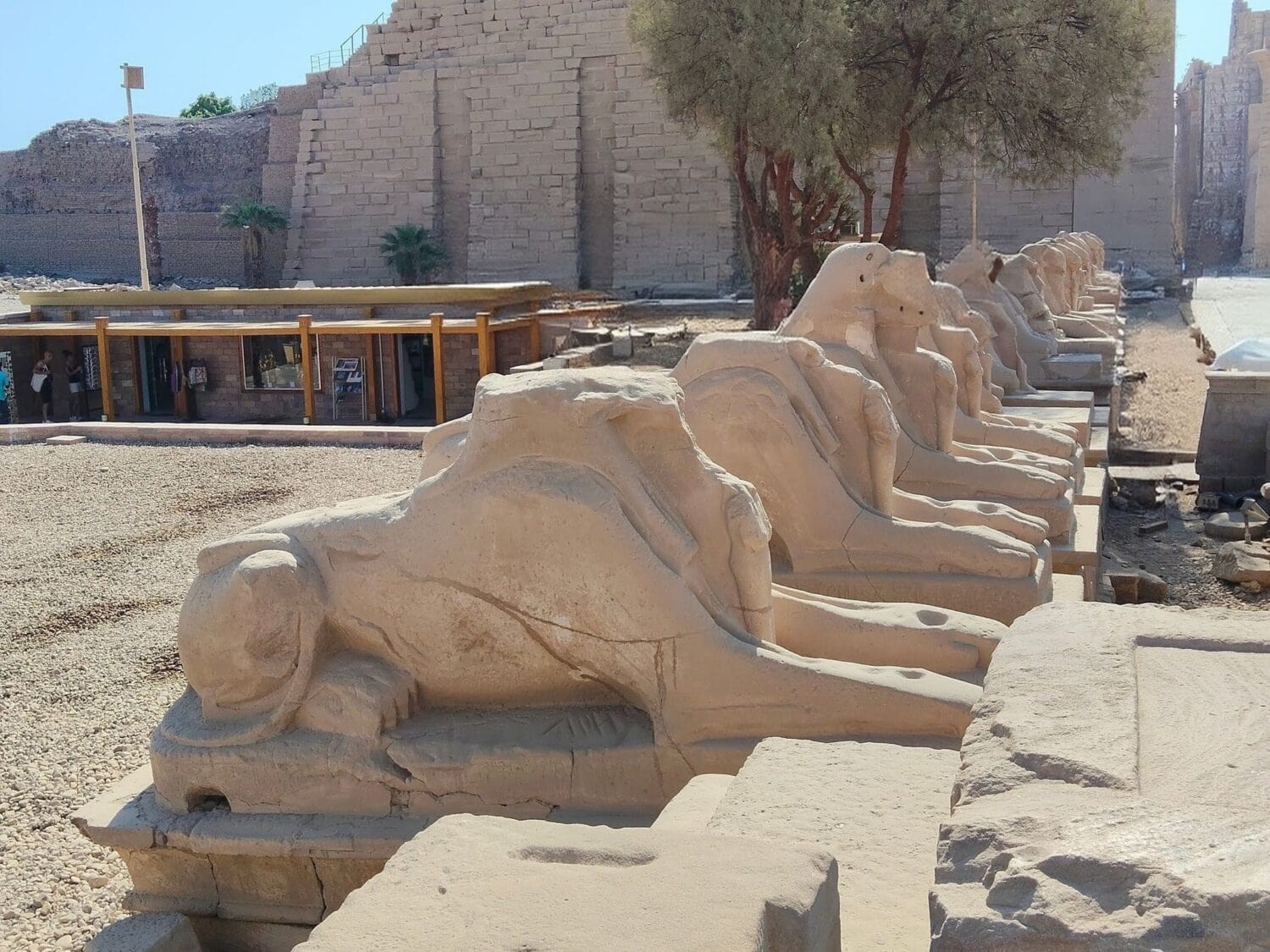
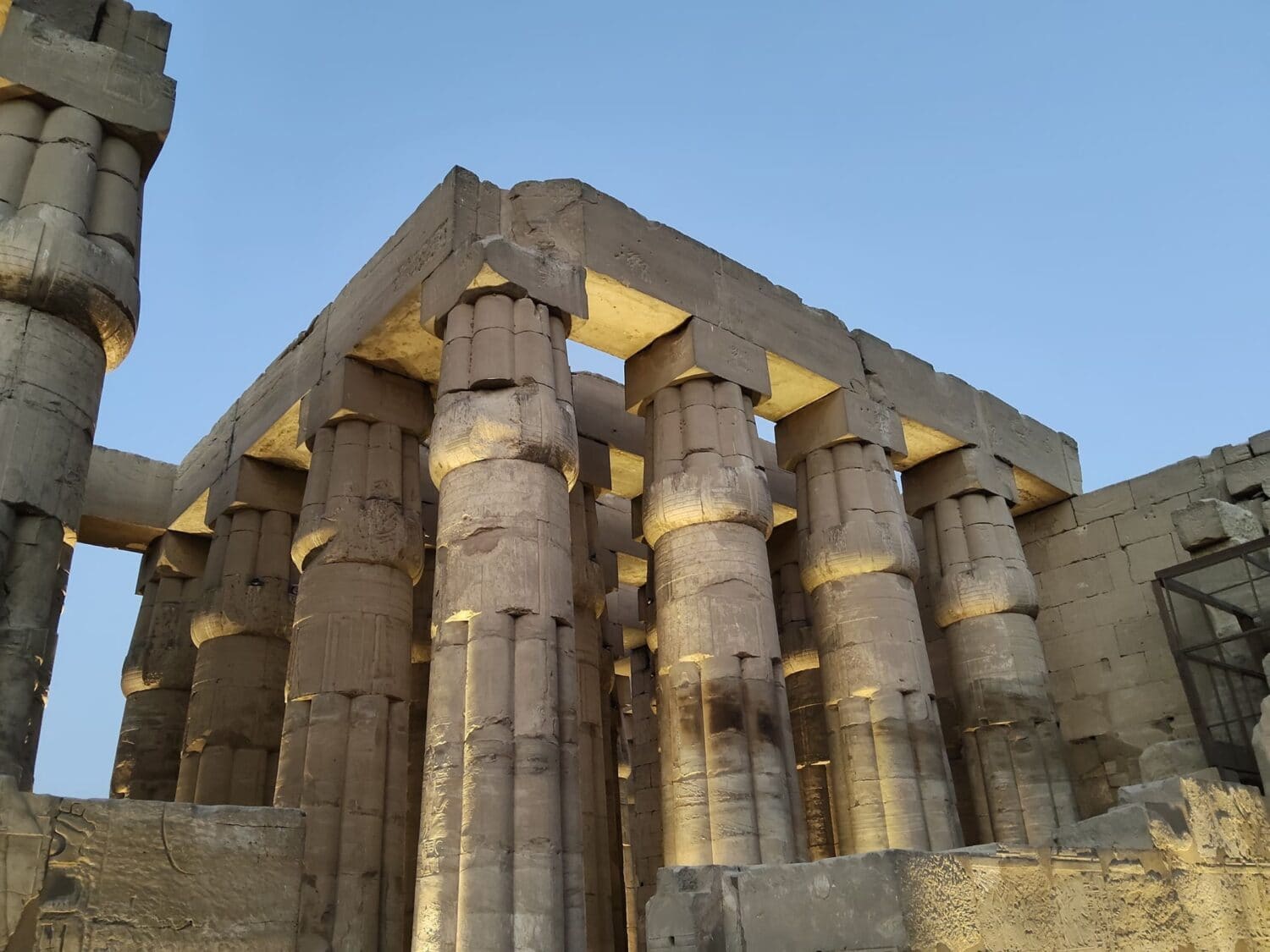
Later that day, we visited Luxor Temple, once connected to Karnak by a three-kilometre avenue lined with sphinxes.
Luxor Temple was central to the Opet Festival, a celebration of renewal and fertility honouring Amun, Mut, and their son Khonsu.
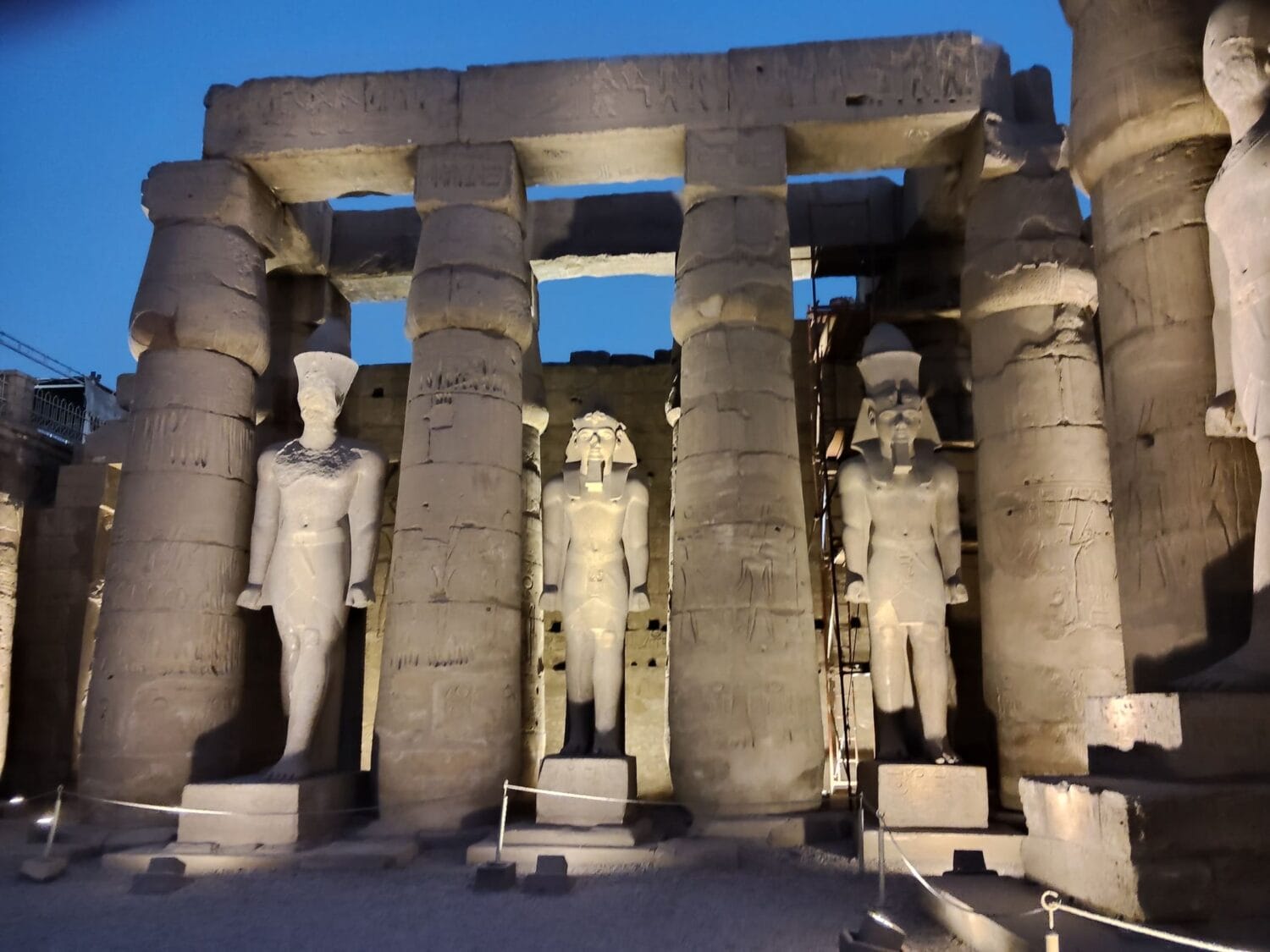
Arriving at dusk made all the difference.
As the heat softened and crowds thinned, warm lighting revealed depth and texture in the statues and reliefs. Walking through the columns in the quiet of early evening felt like stepping into history after the day had exhaled.
The Nile: More Than a River
What ties these experiences together is the realisation that in Luxor, every placement was intentional. The East Bank was for the living. The West Bank was for the dead. To cross the Nile was to move from life and renewal, to memory and eternity. Understanding this simple but profound principle changes the way you experience every temple, tomb, and even the river itself.
Where This Fits in Your Egypt Journey
My experience in Luxor and Karnak was part of a broader, privately guided Egypt itinerary. It was designed for depth, context, and flexibility. If you want to see how these sites fit into a full Egypt adventure, check out the Epic Egypt Itinerary. For more on ancient Egypt’s must-sees and planning tips, return to the main Egypt overview.
Final Thoughts
Few places help you understand ancient Egypt quite like Luxor and Karnak. Here, every stone, every crossing, and every moment of ritual was part of a larger story. It is a story that is still waiting for you on the banks of the Nile.


Meet Your Accredited Tour Specialist, Philip
As a Council of Australian Tour Operators (CATO) Certified Tour Specialist, I’ve gained in-depth knowledge through specialised training with CATO members, enabling me to provide clients with expert tour advice and help them book with confidence. Read More

Frequently Asked Questions
What makes Karnak different from Luxor Temple?
Karnak is a vast complex built over centuries as a city of temples for worship and ritual, while Luxor Temple was the stage for the annual Opet Festival and is more focused in its design.
Is the Valley of the Kings physically demanding?
Some tombs require descending steep, low passages. It can be hot and stuffy, so pace yourself and bring water.
Can you visit both banks in one day?
Yes, but it’s best to spread them over two days for context and comfort.
When is the best time to visit Luxor Temple?
Dusk is ideal for atmosphere and photos. Crowds are thinner and lighting is more dramatic.
Is the Sacred Lake at Karnak open to visitors?
Yes. You can walk around it and photograph, though swimming is not allowed.
Share this on Social Media