

Iceland | Northern Lights
Aurora Borealis, or the Northern Lights, is defined by Oxford University Press as:
A natural electrical phenomenon characterised by the appearance of streams of reddish or greenish light in the sky, usually near the northern or southern magnetic poles. The effect is caused by the interaction of charged particles from the sun with atoms in the upper atmosphere.
We came to Iceland in search of this incredible display, arriving in Reykjavik in the late afternoon. It was cold!
Our pre-booked transfer from the airport to our apartment went smoothly. Once settled, we walked the short distance into the city centre.
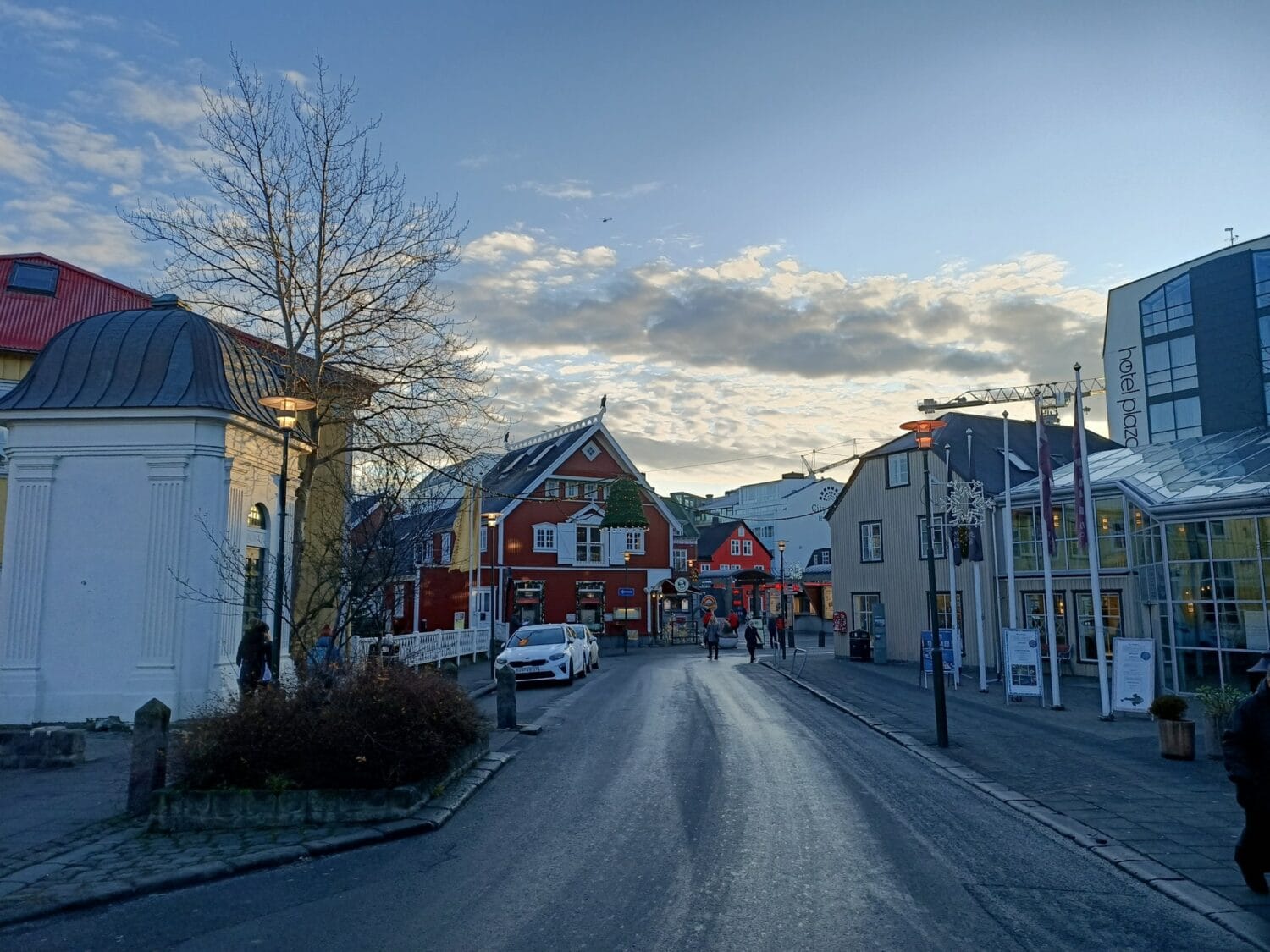
Reykjavik is an enchanting city, full of colourful buildings, bright shopfronts, and great places to eat.
A Slow Morning in the Dark
The next morning I woke to find we had all slept in. I was the first up, and it was already 10:00am, but still dark outside. The days are short at this time of year, something we Australians are not used to. It was, however, a lovely and relaxed way to start the day.
After a late breakfast we headed into town to find an information centre and book a Northern Lights tour. We came across What’s On in Iceland, where we booked a small-group 4WD tour with Happyworld Iceland for later that night.
We spent the afternoon wandering Reykjavik, had a late lunch, and picked up supplies to make homemade minestrone soup, something to warm us up before heading out into the cold.

Chasing the Lights
At about 8:30pm our guide, Gunner, arrived to collect us. The 4WD was high enough that some of our group needed a step ladder to climb in. Soon the city lights were behind us as we drove into the countryside.
Gunner took us to a remote roadside stop where we set up our cameras and waited. We were lucky that no other tour groups stopped there for most of the evening.
It was bitterly cold standing in the darkness. Even with thermals, jackets, neck warmers, and double socks, the cold slowly crept through our shoes and up our legs. Gunner told us the trick was to let our eyes adjust to the darkness, and to turn away when cars passed so the headlights did not ruin our night vision. Every time a vehicle approached, we would all quickly turn away or close our eyes, probably making it look as though we did not want them to stop.
Then one of our group gasped, “I think I see them!”
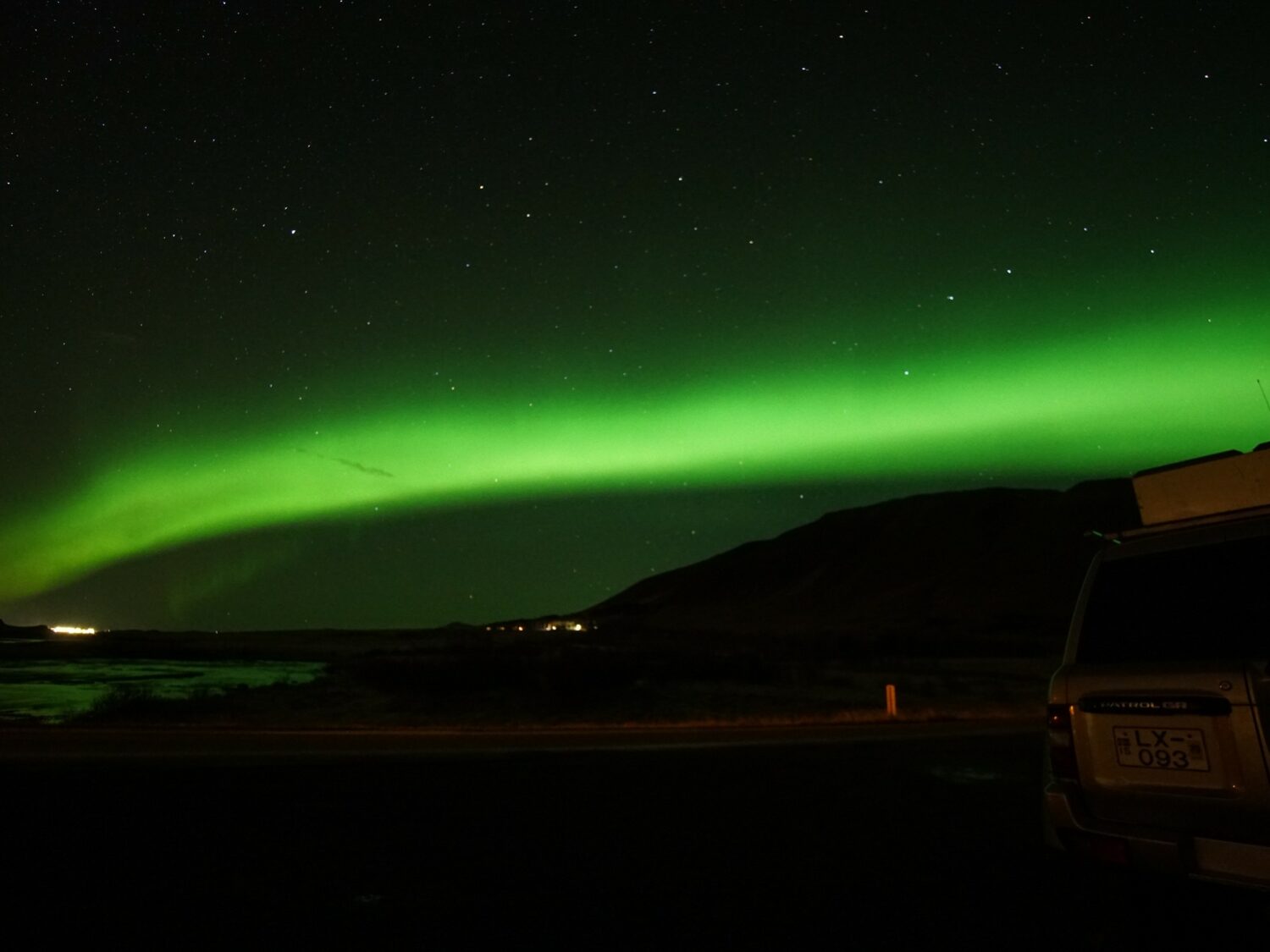
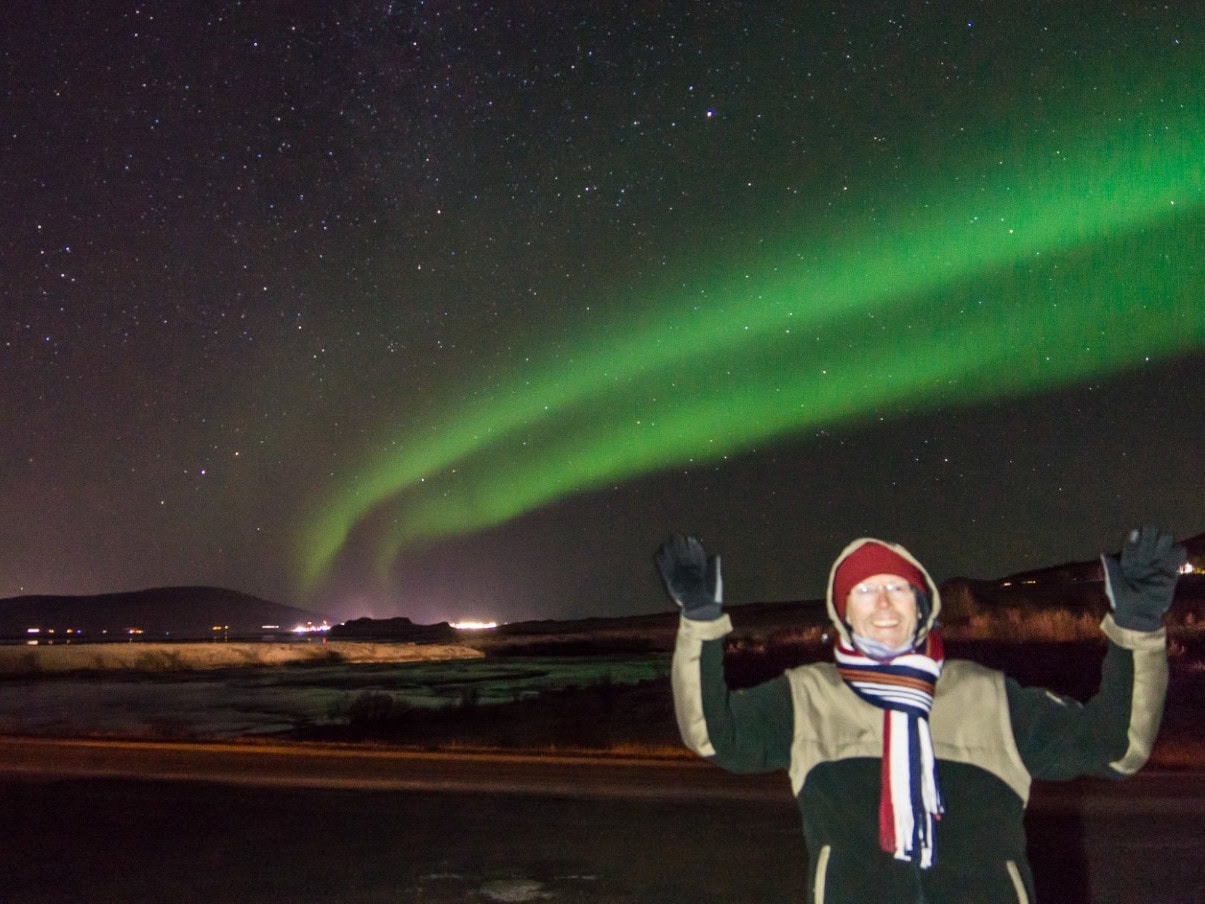
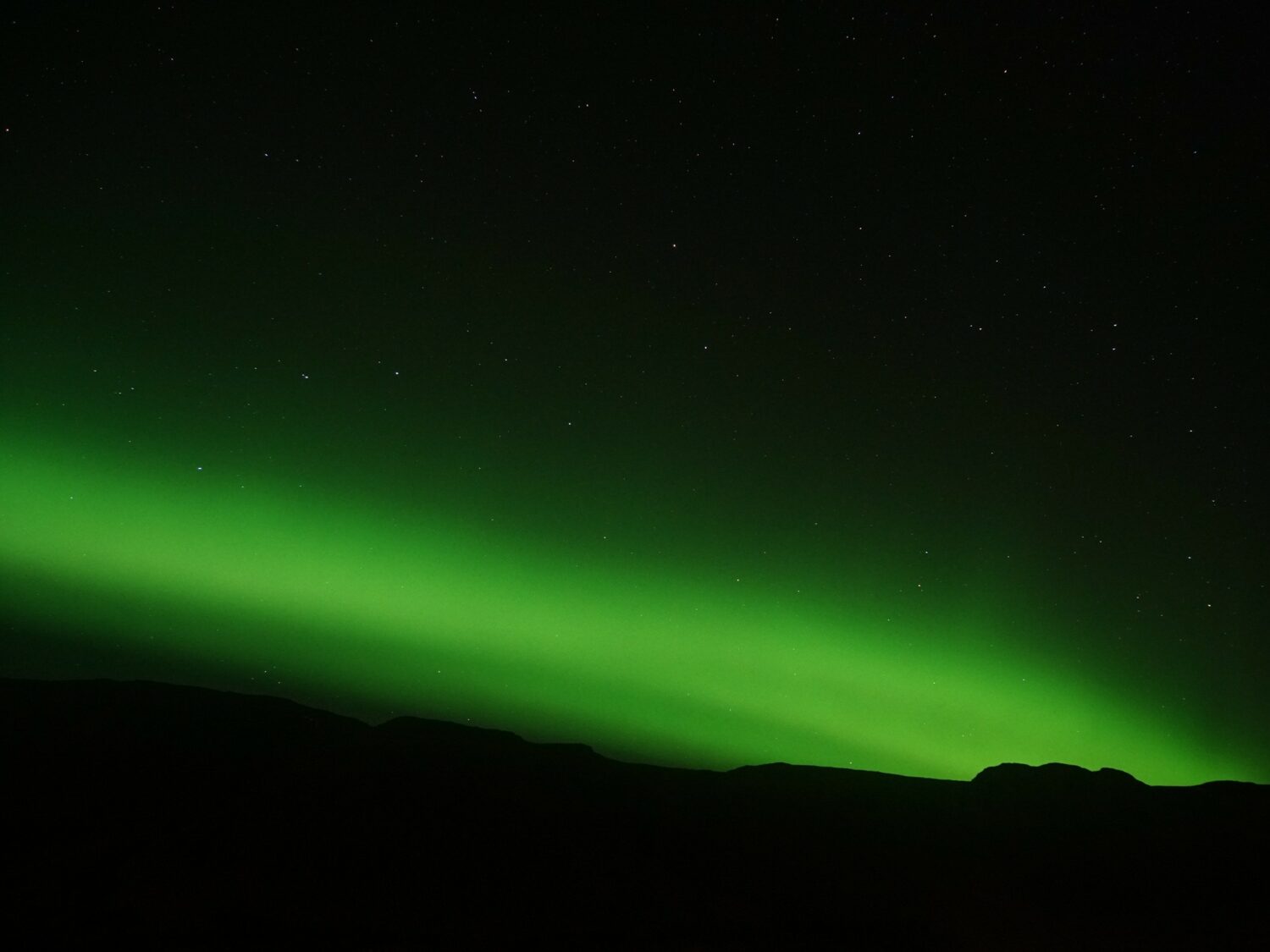
Sure enough, a faint grey-white glow appeared in the sky, almost like a cloud. We soon learned that the human eye does not pick up the colours as well as a camera does. When we took photos, the green became visible. As the display strengthened, the lights shimmered and danced, bright vertical ribbons moving across the sky. It was magical.
A Toast Under the Stars
After a couple of hours of watching and photographing, Gunner produced hot chocolate and a shot of Icelandic Brennvín, literally “burning wine”. Made from fermented grain or potato mash and flavoured with caraway, it is nicknamed the “Black Death”. It certainly lived up to its name, burning all the way down but quickly warming us up. Skál!
As we packed up, a large tour bus pulled in and dozens of tourists spilled out. We were glad the lights had performed for us earlier, giving us an uninterrupted experience.
On the drive back to Reykjavik the lights appeared again, even brighter than before. Gunner pulled over at a safe spot and we all jumped out to watch in awe once more. Eventually the display faded, and we climbed back into the 4WD, tired but exhilarated.
An Unforgettable Night
We were incredibly fortunate to see the Northern Lights on our first attempt. Many people travel to Iceland and never see them, as it all depends on the weather and solar activity.
By the time we returned to our apartment it was after 1am. We were weary but elated.
(We also did the popular Golden Circle tour during our stay, which you can read about here.)


Meet Your Experienced Travel Advisor, Philip
I've always believed that travel isn't just about ticking boxes — it's about meaningful experiences that enrich your life. Born and raised in Darwin, I grew up surrounded by diverse cultures, big skies, and a strong sense of connection — all of which shaped the way I see the world. Read More

Frequently Asked Questions
When is the best time to see the Northern Lights in Iceland?
The Northern Lights are visible from late September to early April when the nights are long and dark. Clear skies and minimal light pollution give you the best chance to see them.
Do you need to join a tour to see the Northern Lights?
You can sometimes see the lights from Reykjavik, but a guided tour increases your chances. Local guides know where conditions are best and take you away from city lights.
How cold is it when viewing the Northern Lights?
It can be extremely cold, especially when standing still outdoors for long periods. Layering thermals, insulated jackets, gloves, hats, and waterproof footwear is essential.
Can the Northern Lights be photographed easily?
Cameras capture more colour and detail than the human eye. Use a tripod, long exposure, and wide aperture. Tour guides often help set up your camera for the best results.
Is seeing the Northern Lights guaranteed?
No, sightings depend on solar activity and clear weather. Even with the best planning, nature decides the outcome. Flexibility and patience are key.
Share this on Social Media