

Iceland | Golden Circle Tour
The second tour we booked through What’s On Iceland was the Classic Golden Circle Tour with EastWest Tours.
This full-day small-group tour visits three of Iceland’s most famous natural attractions:
-
Thingvellir National Park and Öxarárfoss waterfall
-
Geysir Hot Spring area
-
Gullfoss waterfall
Along the way, we stopped for a delicious lunch at Friðheimar Tomato Farm and visited the striking Kerið volcanic crater on our return to Reykjavík.
Getting Started
The day began early, although in Iceland that’s a relative term. It was 8:30 a.m. and still pitch dark. We walked from our apartment to Bus Stop #1 (City Hall), one of the main departure points for tours. It’s worth double-checking your bus number, as several tours leave from the same stop.
We were well layered for the cold, which was just as well. Although the minibus was heated and stocked with thermal blankets, stepping outside into sub-zero temperatures was a shock to the system. The bus seated about twenty people, with one spare seat, so it felt friendly but not crowded.
Our guide, Prentice, was fantastic. She was full of knowledge and stories about Iceland’s history, culture, and quirks. We learned that Icelanders don’t use family surnames. Instead, children take their father’s first name with -son or -dóttir added, meaning that Jon’s son becomes Jonsson and Jon’s daughter becomes Jonsdóttir. We also learned that Iceland has no native dangerous animals. Occasionally a polar bear floats in on an iceberg, but that’s a rare event.
Thingvellir National Park
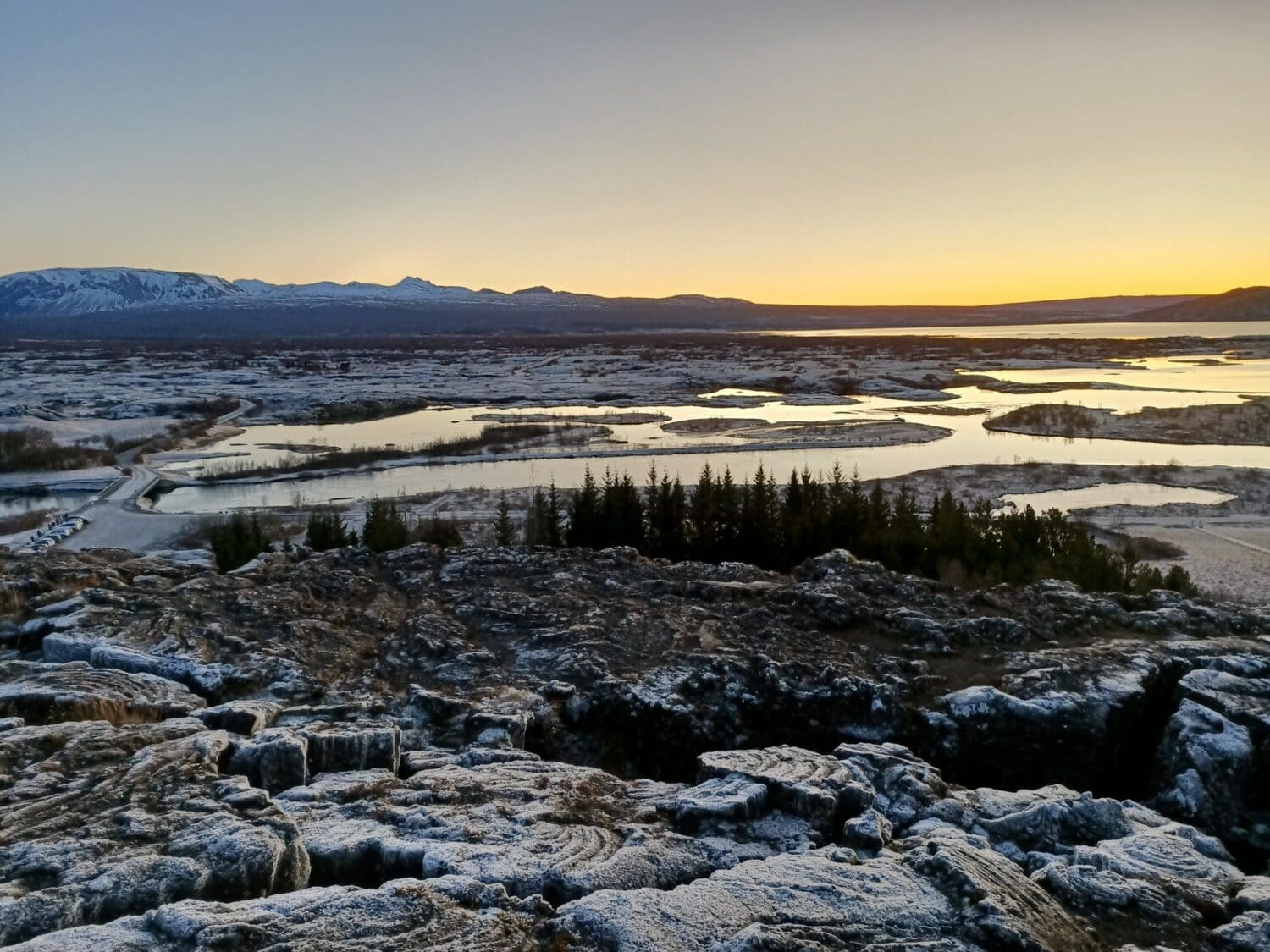
Our first stop was Thingvellir National Park, a UNESCO World Heritage Site and a filming location for Game of Thrones. It sits in a rift valley between the North American and Eurasian tectonic plates. The name Þingvellir means “assembly fields,” marking the site where Iceland’s first parliament was founded.
When we arrived, it was well below zero. We were dropped off at the top of the Almannagjá ravine and instructed to walk down through the lava walls to meet the bus at the bottom. Along the way, we passed Lögberg (Law Rock), where laws were once proclaimed, and Drekkingarhylur pond, where women accused of bearing children out of wedlock were drowned centuries ago.
At the base of the ravine, we continued to Öxarárfoss waterfall. Interestingly, the Vikings are believed to have redirected the waterfall to provide better access to water during parliamentary meetings.
By the time we got back on the bus, none of us could feel our fingers or toes. The wind bit hard, and our faces stung from the cold. My neck warmer, bought from The Viking souvenir shop in Reykjavík, proved invaluable. I wore it pulled up over my nose and mouth, which made breathing in the icy air a little easier.
Laugarvatn and Geysir
On the way to Geysir, we stopped briefly at Laugarvatn, a shallow lake heated by geothermal springs. Steam rose from the ground in patches, giving the landscape a surreal, misty look. Some parts of the lake are so hot they boil year-round, so swimming requires care.
Next was the Geysir Hot Spring area, home to bubbling mud pools and active geysers. The star of the show is Strokkur, which erupts every few minutes, sending water up to thirty metres into the air. The original Geysir, for which all others are named, has been largely dormant since an earthquake in 2000, but the surrounding geothermal energy remains intense.
Gullfoss Waterfall
From Geysir we continued to Gullfoss, one of Iceland’s most iconic waterfalls. The wind was fierce, cutting through even the thickest layers of clothing. With no trees or shelter, the cold felt sharper here than anywhere else that day.
After admiring the falls and browsing the small souvenir shop, we were all happy to retreat to the warmth of the bus and head toward our lunch stop.
Lunch at Friðheimar
Our stop at Friðheimar Tomato Farm was a highlight. The family-run greenhouse uses geothermal energy and artificial lighting to grow tomatoes year-round. Visitors can see the plants up close and learn about Iceland’s sustainable farming methods before sitting down for a simple but delicious meal.
Lunch was tomato soup with freshly baked bread, served inside the greenhouse itself. It felt wonderful to be surrounded by greenery after a morning in the icy outdoors.
Kerið Volcanic Crater
Our final stop was Kerið, a volcanic crater filled with vivid blue water. Formed around 6,500 years ago, the crater’s red volcanic rock contrasts beautifully with the turquoise lake below. Visitors can walk around the rim or down to the water’s edge. The site is privately owned, and a small entrance fee helps maintain the area.
Back to Reykjavík
As the sun set (around 4:30 p.m.), we returned to Reykjavík, tired but happy. The Golden Circle tour had given us a fantastic glimpse into Iceland’s natural beauty and culture.
If you only have one full day to explore beyond the city, this is the perfect tour. It combines history, geothermal activity, waterfalls, and a taste of Icelandic life — all in one unforgettable day.
Read about our first adventure here: Northern Lights tour.


Meet Your Experienced Travel Advisor, Philip
I've always believed that travel isn't just about ticking boxes — it's about meaningful experiences that enrich your life. Born and raised in Darwin, I grew up surrounded by diverse cultures, big skies, and a strong sense of connection — all of which shaped the way I see the world. Read More

FAQs About the Golden Circle Tour in Iceland
1. What is included in the Golden Circle Tour?
Most Golden Circle tours include visits to Thingvellir National Park, Geysir Hot Spring, and Gullfoss waterfall. Many itineraries also stop at Friðheimar Tomato Farm or Kerið volcanic crater for an added local experience.
2. How long does the Golden Circle Tour take?
The Classic Golden Circle is a full-day tour, usually lasting between eight and nine hours. Departures from Reykjavík are typically around 8:30 a.m., returning late afternoon.
3. What should I wear on the Golden Circle Tour?
Dress warmly in layers and wear waterproof outerwear. Temperatures can be below zero, and the wind chill near waterfalls makes it feel even colder. A neck warmer and sturdy shoes are highly recommended.
4. Can I visit the Golden Circle without a tour?
Yes. Many visitors choose to self-drive, but a guided tour offers the advantage of local knowledge, comfort, and the chance to relax while learning about Iceland’s history and geology.
5. Is the Golden Circle worth visiting in winter?
Absolutely. Winter adds a dramatic beauty to the landscapes, with snow-covered lava fields and frozen waterfalls. Just be sure to dress for the cold and daylight hours, which are shorter at that time of year.
Share this on Social Media