

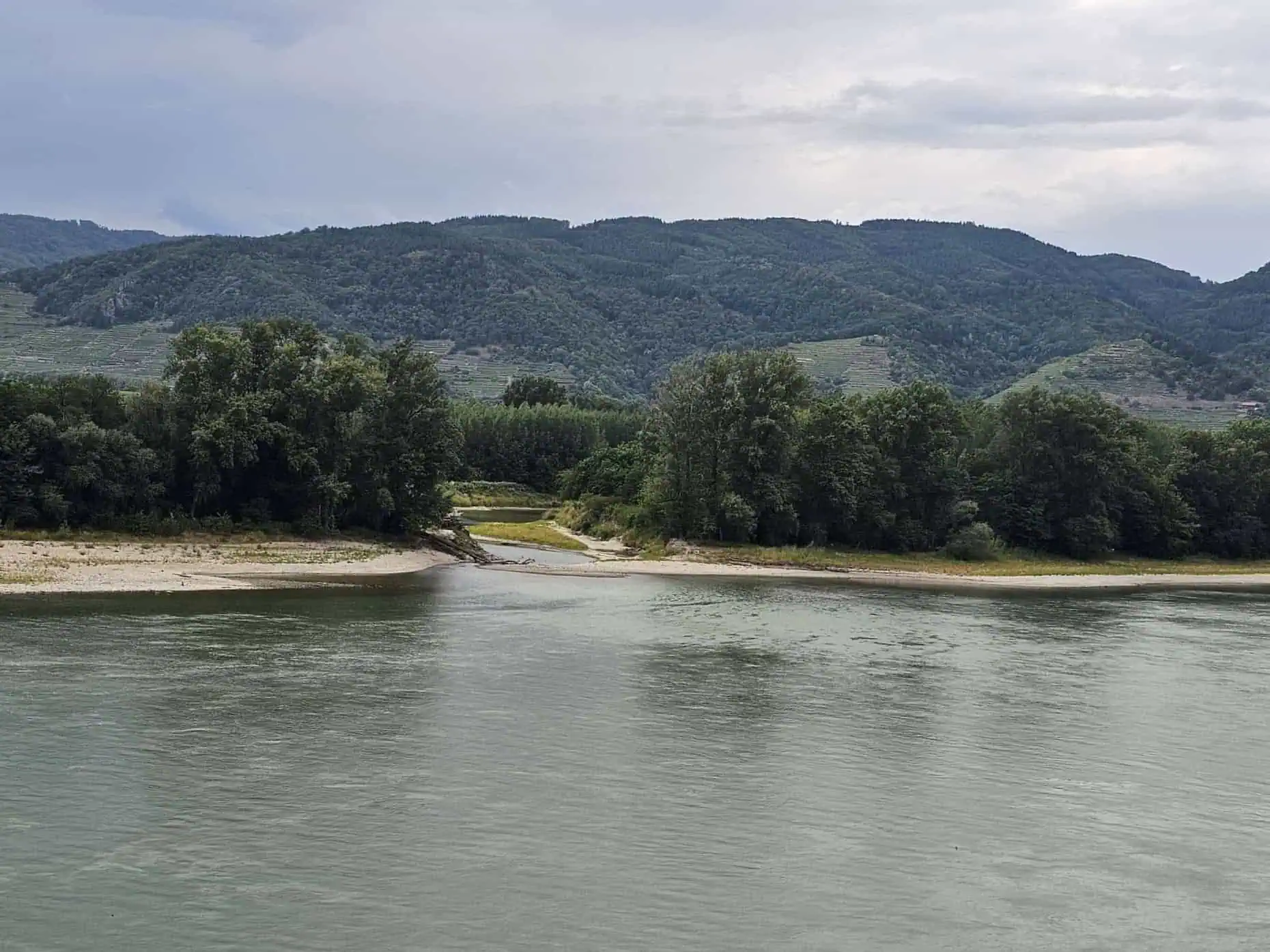
What low water, high water and changing conditions could mean for your holiday
European river cruising appeals to travellers who want to experience several destinations without repeatedly changing hotels or arranging transport between them. Life aboard also provides time to slow down and watch Europe unfold from the water.
Yet a river cruise is shaped by something no cruise line, captain or travel adviser can control: the river itself.
What travellers need to know
Low water, high water, extreme heat and bridge clearances can all affect a European river cruise.
Changes may include altered ports, ship swaps, coach transfers, cancelled excursions, missed sailing time, or hotel stays. There is no completely risk-free season, so it is worth understanding not only what may change, but which parts of river cruising matter most to you.
Many European river cruises run as planned. Conditions vary by river, route and year, and significant disruption usually occurs only when specific environmental factors arise.
New to river cruising? My guide to choosing the right river cruise explains how the experience can differ depending on the river, destination, cruise line and style of ship.
What low-water disruption can mean in practice
During the European summer of 2026, a 15-day river cruise from Amsterdam to Budapest experienced significant low-water disruption. Two of my clients were among the guests onboard.
The first part of the holiday delivered much of what had been expected: good food, new friendships, time aboard and visits to different European cities and towns. Guests were advised early that low water might require a ship change, although there was still hope that the itinerary could continue.
As conditions deteriorated, the journey eventually involved three different ships. Guests packed their belongings and left their luggage outside their cabins for transfer to a second vessel. Two days later, they packed again and travelled by coach to a third ship in Bratislava.
Navigation between Vienna and Budapest then became impossible, and the cruise portion ended two days early. The ship remained docked while guests completed the final journey to Budapest by coach.
The cruise line continued to provide transport, meals, sightseeing and accommodation, including a hotel stay in Budapest. Compensation was also offered for the affected portion.
At the same time, aspects of the experience became more complex as conditions changed. Decisions were sometimes made at short notice, and logistics such as packing, transfers and waiting for updates became a more noticeable part of the journey than originally expected.
The holiday did not simply stop, but the way it was experienced changed considerably.
Experiences like this can vary significantly depending on the timing, the location of the disruption and the options available to the cruise line at the time.
The experience provides a practical example of what changing river conditions can mean beyond a simple alteration to the order of the ports. It may involve ship changes, repeated packing, coach transfers, altered excursions and, in more serious cases, part of the itinerary continuing by land.
Many positive elements of the holiday remained, including the destinations, food, companionship and care shown by the crew. At the same time, coaches, stationary ships and a hotel stay were not the same as the relaxing river journey originally expected.
Disruption therefore cannot be measured only by how many destinations remain on the itinerary. It also needs to be considered in terms of how much of the original river cruise experience has been preserved.
This was part of a much wider low-water event
By 16 July 2026, Reuters reported that the Danube in Budapest had fallen to within eight centimetres of its previous record low. Cruise vessels were stranded or waiting in ports, sightseeing services were suspended and one operator had cancelled a small number of upcoming Danube and Rhine departures.
Conditions continued to worsen. The effects extended far beyond tourism: on 2 August, record-low Danube levels forced Hungary’s Paks nuclear power plant to shut down completely for the first time in 44 years.
That wider context does not make a traveller’s disappointment less valid. It does show that these were not routine itinerary adjustments or an isolated problem aboard one ship. The falling river was placing pressure on passenger cruising, freight, agriculture and essential infrastructure across the region.
Why low water affects river ships
River ships are designed with relatively shallow drafts, but they still require enough water beneath the hull to navigate safely.
Water levels can vary along the same river and are influenced by rainfall, heat, soil moisture, snowmelt and conditions throughout a large catchment. A problem may be confined to one critical section rather than closing an entire river.
When part of a route becomes too shallow, the captain and operator must decide whether the ship can continue safely and what alternatives are available.
How a river cruise may change
A cruise line may use one or more contingency arrangements:
- Transfer guests to another ship beyond the affected section
- Move passengers between vessels or destinations by coach
- Change the embarkation, disembarkation or port locations
- Keep the ship docked while excursions continue by road
- Arrange hotel accommodation
- Shorten or cancel part of the cruise
- Offer compensation or a future cruise credit
A ship swap can preserve much of an itinerary when the operator has another suitable vessel positioned beyond the problem area.
In the best circumstances, guests travel between ships during an excursion and find the same cabin allocation waiting for them.
It is less seamless when several changes are required. Early starts, repeated packing, long coach journeys and uncertainty can become a significant part of the holiday.
Widespread disruption can also place pressure on the availability of ships, coaches, hotels, guides and docking places. An operator’s options may depend on where its vessels are positioned and how much warning it has.
Why answers can change at short notice
Navigation decisions rely on current water readings, forecasts, local restrictions, bridge clearances and the characteristics of the individual ship.
Official river information services provide current water levels, forecasts, shallow sections, bridge clearances, lock information and navigation notices. However, these readings apply to particular locations and cannot guarantee that an individual vessel will be able to complete every section of a two-week itinerary.
The river conditions themselves are outside the control of cruise lines and travel advisers, while the available response may depend on real-time conditions, vessel movements and local resources.
Changing a cruise too early may unnecessarily disrupt a departure that could have continued. Waiting for greater certainty may leave guests receiving significant information shortly before a transfer.
Cruise lines may not always be able to give a definite answer, but they can explain the possible scenarios before departure and as conditions evolve.
A traveller may hear that “the itinerary may change”, but this can sometimes involve more than simply visiting the same ports in a different order.
How high water can also interrupt a cruise
Moving the cruise to another season does not remove every river-related risk.
Heavy rainfall, rapid snowmelt and flooding can raise water levels and strengthen currents. High water also reduces the space available beneath bridges.
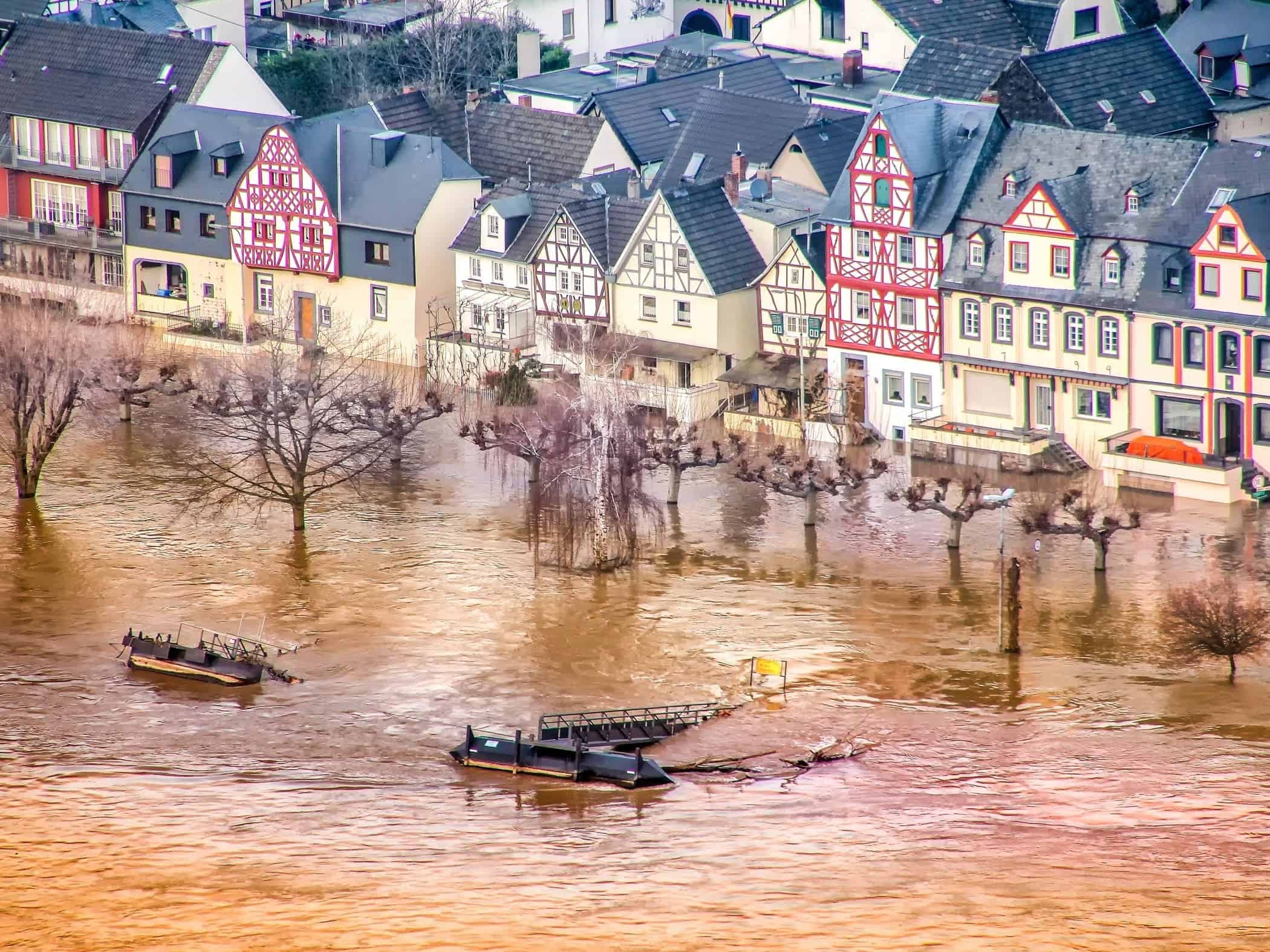
Possible consequences include:
- Delayed or suspended navigation
- Altered ports and excursions
- Coach transfers or ship swaps
- Inaccessible landing places
- Missed sections of sailing
- Hotel accommodation or a shortened cruise
There is therefore no single month when interruption becomes impossible.
Some Sun Deck closures are a normal part of the route
On an Amsterdam-to-Budapest river cruise, access to the Sun Deck may be restricted for several days while the ship travels along parts of the Main River and Main-Danube Canal.
The route passes beneath numerous low bridges and through locks, so outdoor furniture, railings and parts of the wheelhouse may need to be lowered for safe passage.
This is generally a normal feature of the route rather than a result of unusually low water. It is still important information for anyone choosing the cruise partly because they imagine spending considerable time outdoors watching the scenery pass.
Summer heat affects the time ashore
Long daylight hours and warm evenings are part of summer’s appeal, but European river cruises usually include walking tours, historic centres, cobbled streets and excursions with limited shade.
During a heatwave, the comfort of touring may change even when navigation is unaffected.
What matters most to you about river cruising?
For some travellers, the pleasure lies in watching the scenery drift by, relaxing onboard and unpacking only once. For others, the main attraction is stepping ashore somewhere different each day for sightseeing, cultural experiences and local food.
Most travellers value both. The more revealing question is: Which part would be hardest to lose if conditions changed?
Am I still getting what I paid for?
This is a reasonable question.
When navigation becomes impossible, an operator may continue to provide accommodation, meals, transport and visits to many of the planned destinations.
However, preserving the itinerary is not necessarily the same as preserving the cruise.
Travelling by coach, changing vessels repeatedly or staying in a hotel may not feel equivalent to spending those days sailing along the river.
Questions to consider before booking
For some travellers, it can be helpful to consider:
- Is the shipboard experience or the destination programme more important?
- Would you still enjoy the holiday if some travel between places occurred by coach?
- How would you manage a ship change, including packing and transfers?
- Are long coach journeys a concern?
- How important is it to settle into your cabin and avoid repeated packing? If this is one of the main attractions of a river cruise for you, understand that serious disruption may require one or more ship changes.
- Are the Sun Deck and outdoor facilities important?
- What could happen if part of the river becomes unnavigable? Check with your travel adviser or the cruise line.
- What does your travel insurance cover?
Should you avoid a European river cruise in summer?
Not necessarily.
A dry summer can increase low-water risk, but low water can persist into autumn. High water can occur after heavy rainfall or snowmelt.
The aim is not to identify a perfect, risk-free month. It is to understand the seasonal trade-offs and choose the timing that best suits how you want to travel.
The conditions are only one part of choosing a river cruise. You can also compare the major waterways and experiences in my guide to European river cruises.
River cruising remains a rewarding way to experience Europe
River cruising can still offer one of the most comfortable and rewarding ways to experience Europe. For many travellers, it remains a highly enjoyable and well-paced way to see multiple destinations without the need to constantly repack or navigate independently.
The events of summer 2026 simply reinforce that rivers are natural environments, not controlled transport corridors.
Understanding that reality does not take away from the experience. It helps travellers choose the style, timing and expectations that are right for them.
Frequently Asked Questions
Can low water cancel a European river cruise?
Yes. If a section becomes too shallow for safe navigation, part of the cruise may be shortened or cancelled. Depending on the circumstances, the operator may instead use ship swaps, coach transfers, alternative excursions or hotel accommodation.
What happens if river levels are too high or too low?
Possible changes include altered ports, missed sailing time, coach transfers, changing ships or continuing part of the itinerary from a hotel. The response will depend on the affected river section, the ship and what alternatives are available at the time.
Is there a best month for avoiding river cruise disruption?
There is no completely risk-free month. Extended hot and dry periods can cause low water, while heavy rain and snowmelt may create high-water problems. Conditions vary between rivers, routes and years.
Could I spend part of my river cruise travelling by coach?
Yes. When a ship cannot navigate a particular section, guests may travel between ships or destinations by coach. This could involve a short transfer or several hours on the road.
Are Sun Deck closures normal on European river cruises?
They can be. On some routes, including sections of an Amsterdam-to-Budapest itinerary, the Sun Deck may be closed while the ship passes beneath low bridges or through locks. This is normally a safety requirement rather than a sign of unusual river conditions.
Choosing the Right River Cruise
A European river cruise can still be an extraordinary way to travel. The key is choosing an itinerary, season and style of cruise that suit what matters most to you.
I can help you compare the options, understand the practical trade-offs and choose a river cruise with a clearer picture of what to expect.


Meet Your Cruise Specialist, Philip
As a CLIA Top 100 Master Cruise Consultant in Australia, I bring specialist knowledge across ocean, river, small-ship and expedition cruising. I can help you compare cruise lines, ships, itineraries and cabin options, with practical advice based on how you like to travel. Read More
