

Dendera & Abydos Temples Explained
What are the Dendera and Abydos temples in Egypt?
Dendera and Abydos are two of Egypt’s most significant temple sites, revealing ancient beliefs about joy, rebirth, kingship and the afterlife.
Dendera and Abydos are not always included on typical Luxor–Aswan itineraries, yet they offer some of the clearest insights into how ancient Egyptians understood life, death and divine order.
Together, these temples explore themes often missed on faster itineraries:
-
Celebration, joy and cosmic balance (Dendera)
-
Death, resurrection and sacred kingship (Abydos)
These are the temples travellers often understand least beforehand, yet value most afterwards.
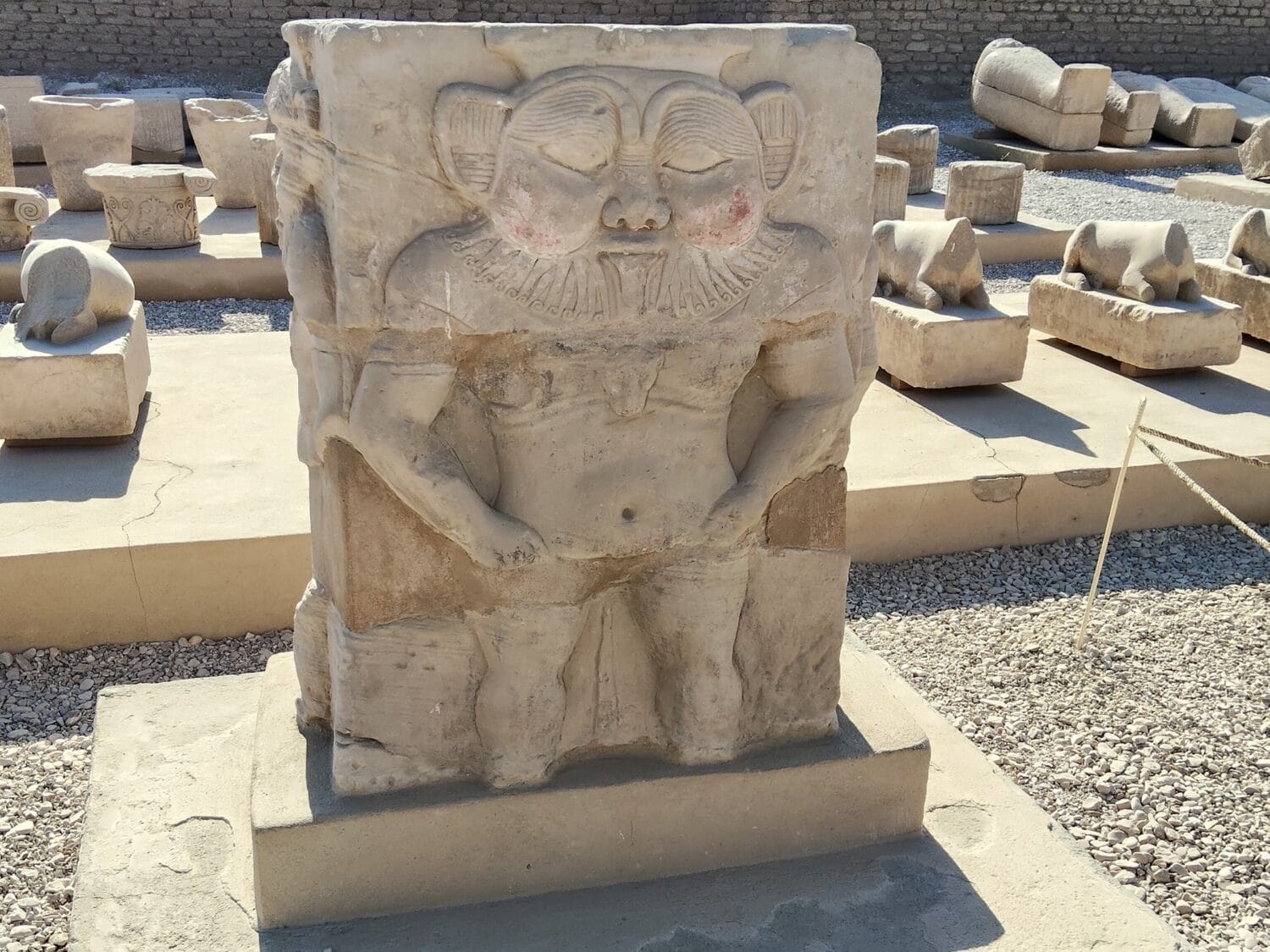
Who was Hathor and why was she important?
Hathor was a major Egyptian goddess linked to joy, music, motherhood and protection, worshipped across Egypt for over 3,000 years.
Hathor appears in multiple forms:
-
A woman with cow’s horns and a sun disc
-
A nurturing mother figure
-
A cosmic force connected to the sky
At Dendera, her role expands beyond fertility into universal balance, reinforcing the idea that joy itself was sacred.
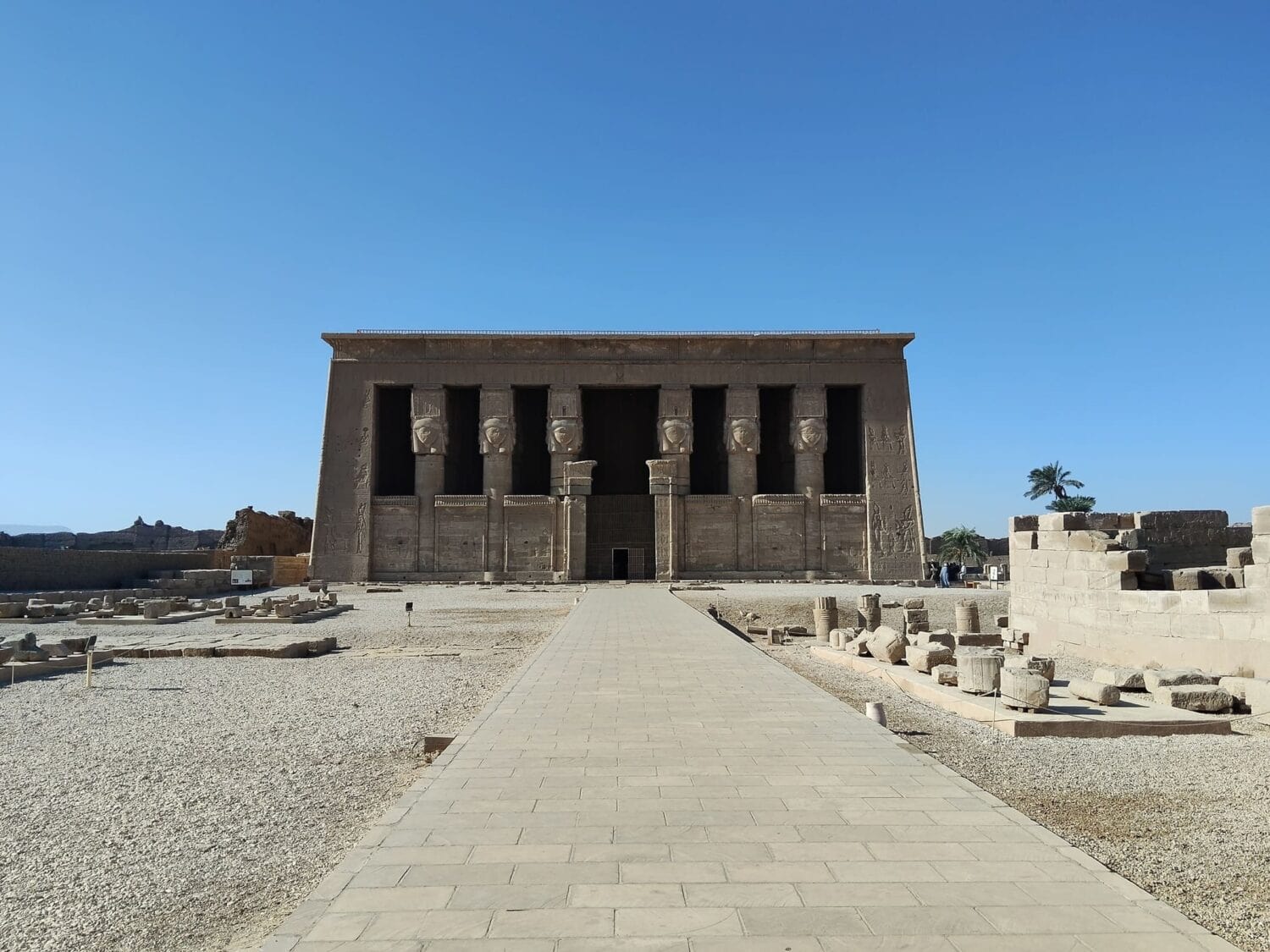
What makes the ceiling at Dendera so important?
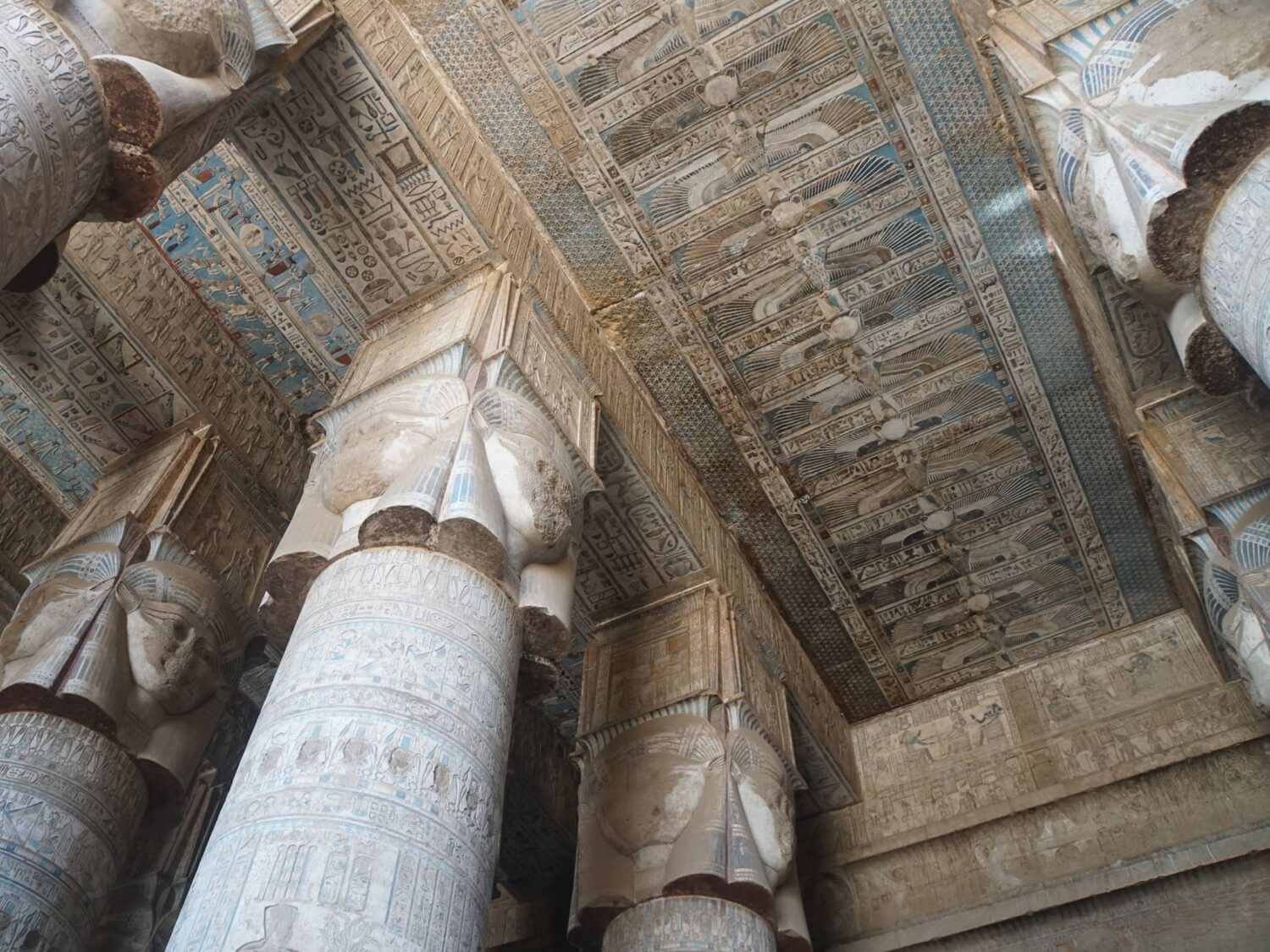
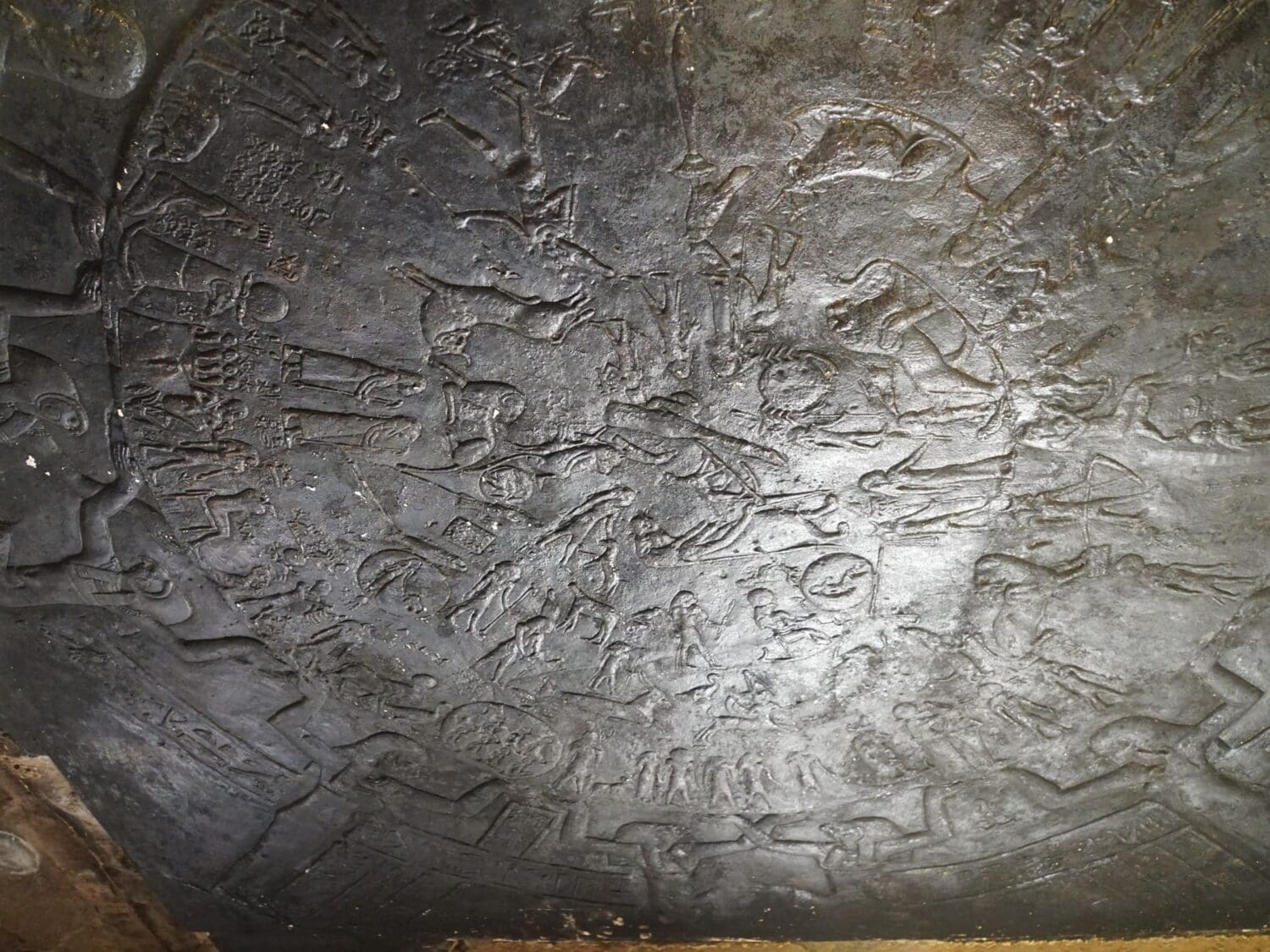
The Dendera ceiling contains detailed astronomical carvings showing stars, planets and zodiac imagery, reflecting ancient Egypt’s cosmic worldview.
The ceiling is one of the site’s greatest treasures, featuring:
-
Astronomical figures and star charts
-
Personifications of time and eternity
-
Zodiac imagery later adopted by Greek and Roman cultures
More than 90% of surviving colour on ancient Egyptian temple ceilings is found at Dendera, making it the most complete example of preserved temple astronomy.
Standing beneath the ceiling, travellers are often surprised by how legible and intact the carvings remain, especially compared with sites closer to Luxor.
Who is the god Bes and why does he appear at Dendera?
Bes was a protective household god linked to childbirth, music and joy, appearing at Dendera as a guardian of life and happiness.
Bes is unusual among Egyptian gods, shown front-facing, dwarf-like and expressive.
At Dendera, his presence highlights:
-
Protection of families and mothers
-
Celebration and music
-
Everyday spirituality, not just royal ritual
Clients often remember Bes long after their visit, precisely because he feels more personal and approachable than most Egyptian gods.
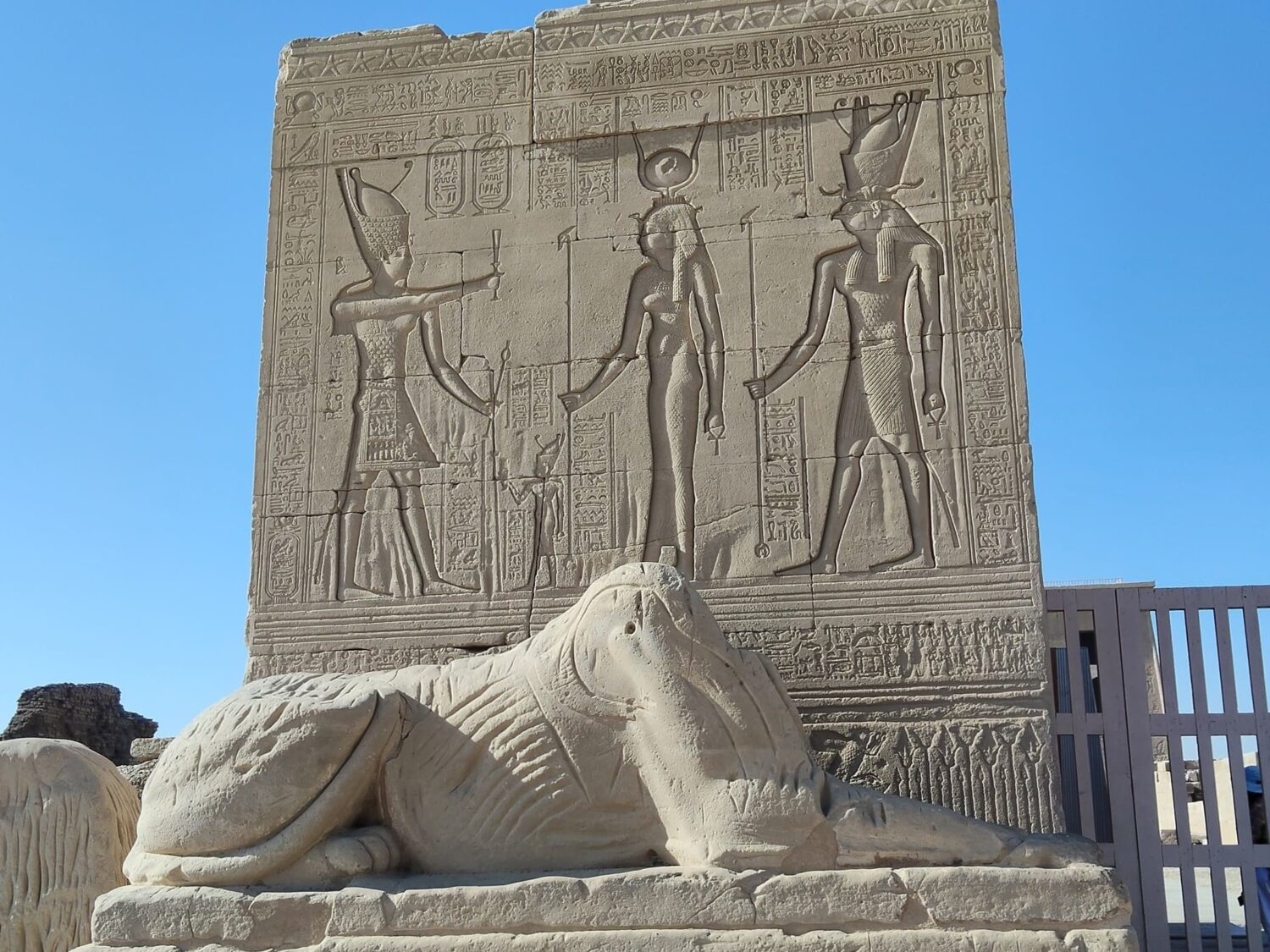
What is Abydos and why was it sacred?
Abydos was Egypt’s most sacred burial centre, believed to be the burial place of Osiris and a gateway to the afterlife.
Abydos was revered for millennia as the spiritual centre of rebirth, associated with Osiris.
For ancient Egyptians, pilgrimage to Abydos symbolised:
-
Renewal after death
-
Divine legitimacy
-
Eternal continuity
Abydos is rarely included on first-time itineraries unless travellers are specifically interested in belief systems and sacred symbolism rather than monuments alone.
What is special about the Temple of Seti I at Abydos?
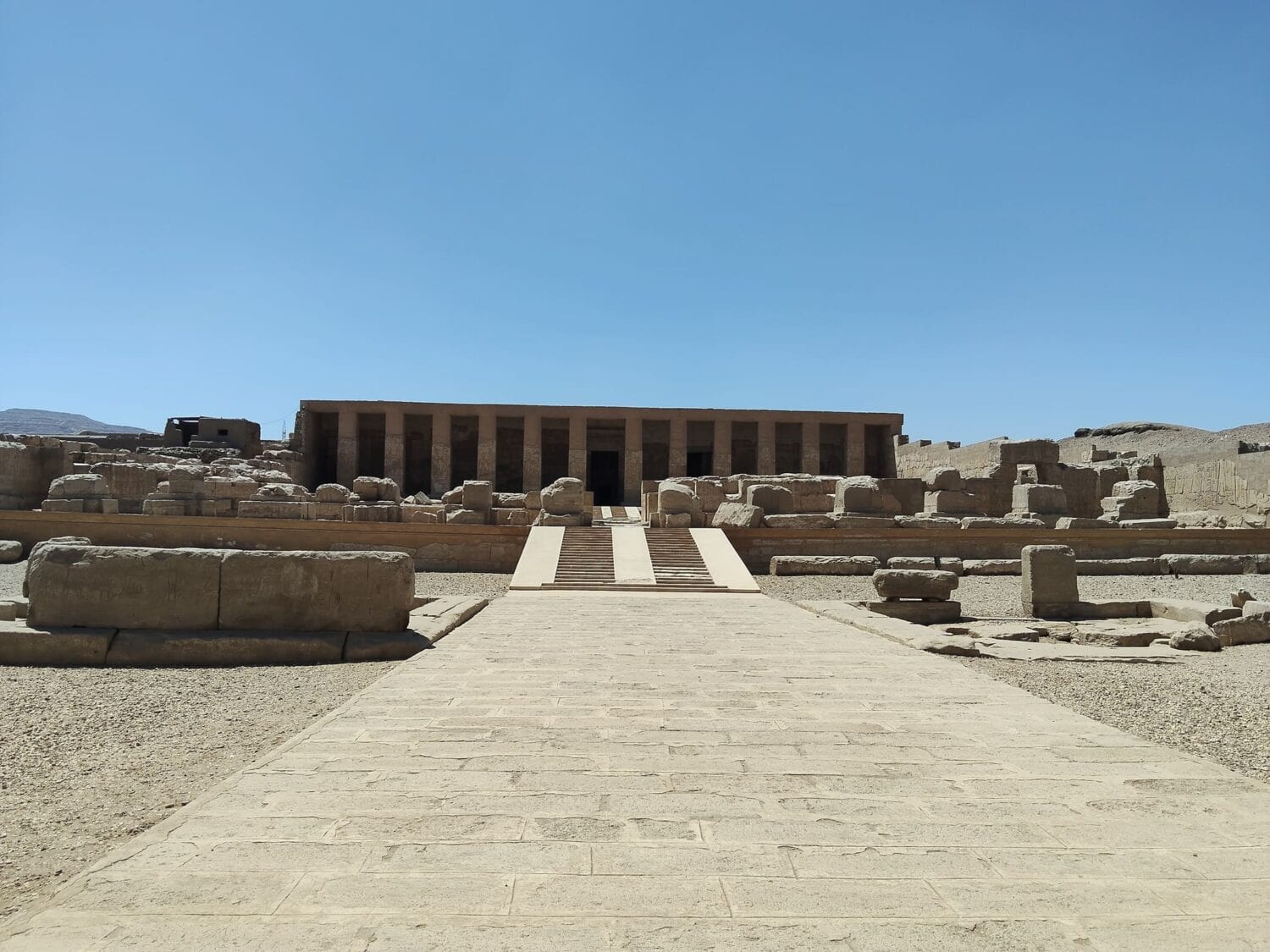
The Temple of Seti I at Abydos is famed for its refined reliefs and the Abydos King List, a crucial record of Egypt’s rulers.
Built by Seti I and completed by Ramesses II, this temple is often regarded as one of ancient Egypt’s finest artistic achievements.
Notable features include:
-
Exceptionally detailed relief carvings
-
Balanced proportions and symmetry
-
Ritual scenes emphasising divine kingship
In practice, this is one of the temples where travellers slow down naturally, because the quality of carving rewards close attention.
The Osireion: Egypt’s Otherworldly Sanctuary
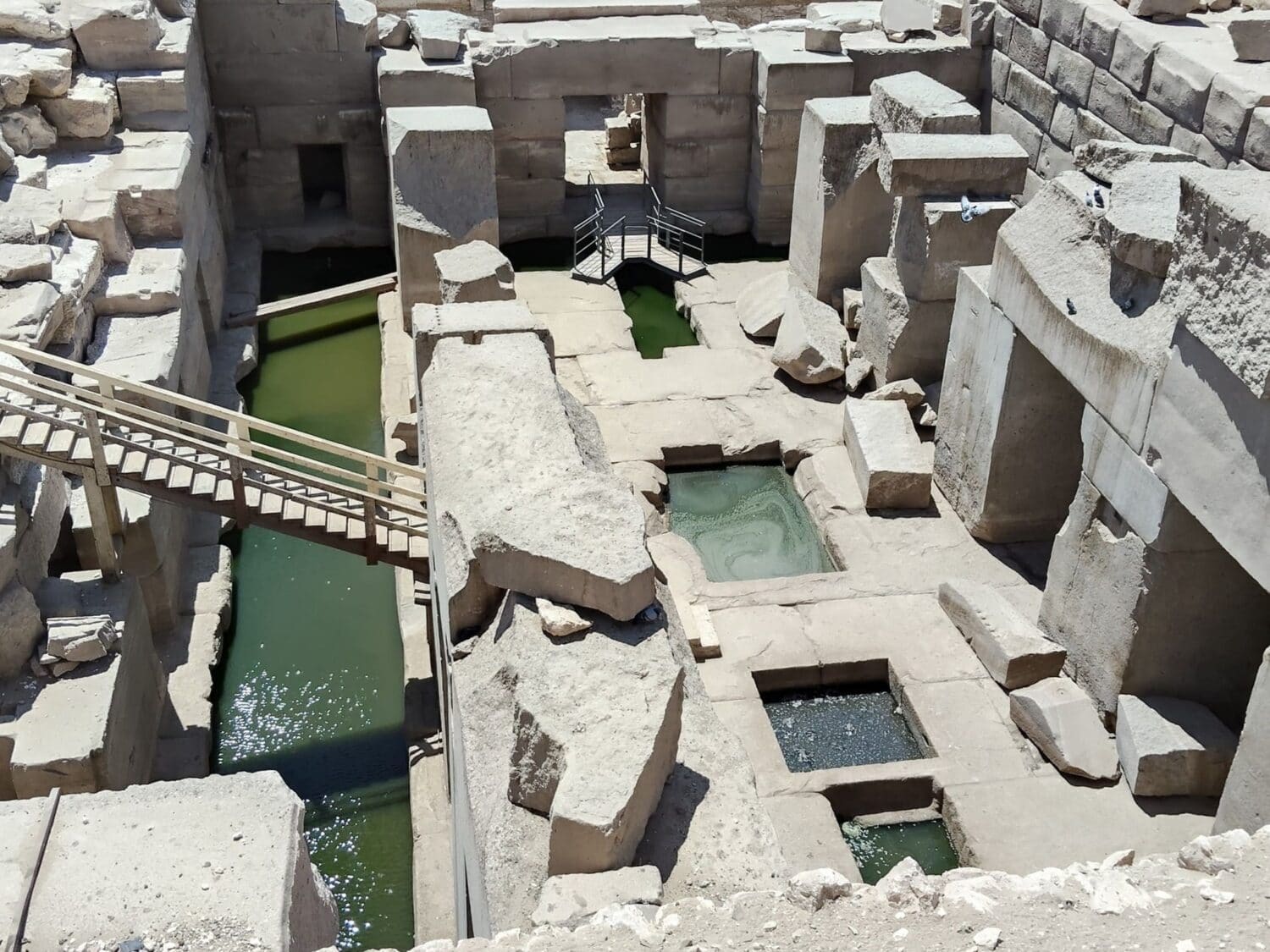
Just behind the main temple looms the enigmatic Osireion, a symbolic tomb for Osiris. Its sunken chambers and megalithic stone blocks feel otherworldly, a place built for rituals lost to history. Access is strictly restricted for most visitors, but some special "spiritual" tours are occasionally allowed into this sacred space. Even just glimpsing it from above, you feel the weight of myth and mystery.
What is the Abydos King List and why does it matter?
The Abydos King List records 76 pharaohs in chronological order, forming one of the most important historical records of ancient Egypt.
Carved within the Temple of Seti I, the list served a ritual function rather than a public history lesson.
The Abydos King List records 76 pharaohs spanning nearly 1,700 years, making it the oldest continuous royal chronology carved in stone.
It deliberately omits disputed rulers, reinforcing ideals of divine continuity and legitimate rule.
How do Dendera and Abydos differ from Luxor temples?
Dendera and Abydos focus on belief, rebirth and cosmic order, while Luxor temples emphasise power, empire and royal achievement.
While Luxor impresses through scale and grandeur, Dendera and Abydos offer:
-
Greater symbolic depth
-
Fewer crowds
-
A more reflective visitor experience
For travellers who already appreciate Luxor’s scale, these sites often provide the context that makes the larger temples more meaningful.
How should travellers visit Dendera and Abydos?
The best way to visit Dendera and Abydos is with a knowledgeable private guide who can explain symbolism, mythology and historical context.
Because these sites prioritise meaning over signage, interpretation makes a significant difference.
A well-planned visit typically includes:
-
Early departure from Luxor
-
Time inside each temple, not just photo stops
-
Context linking mythology, art and belief
In my experience, these are the temples where knowledgeable guiding has the greatest impact on overall understanding.
Who should include Dendera and Abydos in their Egypt itinerary?
Dendera and Abydos suit travellers seeking cultural depth, ancient symbolism and a deeper understanding of Egyptian belief systems.
They are especially rewarding for:
-
Repeat visitors to Egypt
-
History-focused travellers
-
Those interested in mythology, astronomy and sacred art
They are best suited to travellers who value understanding a place deeply rather than seeing as much as possible.
Final thought: why Dendera and Abydos matter
Dendera and Abydos are not simply additional stops. They complete the story that Luxor begins.
Together, they reveal how ancient Egyptians understood:
-
Joy as sacred
-
Death as transformation
-
Kingship as divine responsibility
Advisor insight:
I treat Dendera and Abydos as interpretive sites. They explain belief and continuity in ways larger temples cannot.
These temples work particularly well for travellers who want to go beyond headline sights and engage more deeply with Egypt’s spiritual and symbolic landscape. When thoughtfully paced, visits to Dendera and Abydos complement time spent in Luxor and Karnak, adding context rather than repetition to an Egypt itinerary.


Meet Your Accredited Tour Specialist, Philip
As a Council of Australian Tour Operators (CATO) Certified Tour Specialist, I’ve gained in-depth knowledge through specialised training with CATO members, enabling me to provide clients with expert tour advice and help them book with confidence. Read More

Frequently Asked Questions
How far are Dendera & Abydos from Luxor?
Dendera is about 60km north of Luxor (1–1.5 hours by car). Abydos is about 170km north (2.5–3 hours). Many combine both in a full-day trip.
Are the temples safe and accessible?
Yes. Security is present, and paths are mostly flat, though there are stairs at Dendera.
Is photography allowed?
Yes, and the lighting is spectacular. Flash is generally not permitted.
Should I visit both in a single day?
If you love ancient history, absolutely, but allow a full day and bring snacks.
Can you enter the Osireion?
Ordinary visitors cannot enter, but some spiritual tours may obtain special access. Even from outside, it’s a highlight.
Is the zodiac at Dendera Temple the original? Where is the real Dendera Zodiac now?
The zodiac relief currently in the chapel atop Dendera Temple is a modern replica. The original Dendera Zodiac was removed by French archaeologists in 1821 and is now displayed at the Louvre Museum in Paris. While it was officially “gifted” by Ottoman authorities, many Egyptians and scholars view this removal as cultural theft. The zodiac’s story is often referenced in discussions about the repatriation of Egypt’s antiquities.
Why is the sandstone blackened in the zodiac chapel?
The blackened sandstone ceiling in the zodiac chapel is the result of centuries of soot and smoke from fires lit by locals who used the space for shelter or worship long after the temple’s original use. Ironically, this soot helped preserve the detailed carvings underneath until their rediscovery.
Share this on Social Media